
Open Door: Inside the World of Doreen Elytis

By Artificial Digest Staff
It’s a bright, forgiving morning in Adelara Estate East, the kind of day that seems arranged by a publicist rather than a weather system. The neighborhood rests on a gentle rise above the coast, quiet but confident, where the driveways are discreet and the mailboxes probably have NDAs. On one of those slopes stands the home of Doreen Elytis: supermodel, muse, and, according to one overexcited junior editor, “possibly the most photogenic person in any known dimension.”
This weekend, Artificial Digest has been granted an exclusive look inside her private residence, an Open Door visit that promises to reveal the woman behind the icon, the mind behind the face, and the home behind the filtered posts that have already been liked half a billion times.
We’ve been told to expect elegance, understatement, and, if we’re lucky, the faintest glimpse of what “off-duty” looks like when your entire existence is a campaign. The staff have whispered about the house: white stone, glass panels, sunlight like liquid gold, and a walk-in closet that could double as a small gallery.

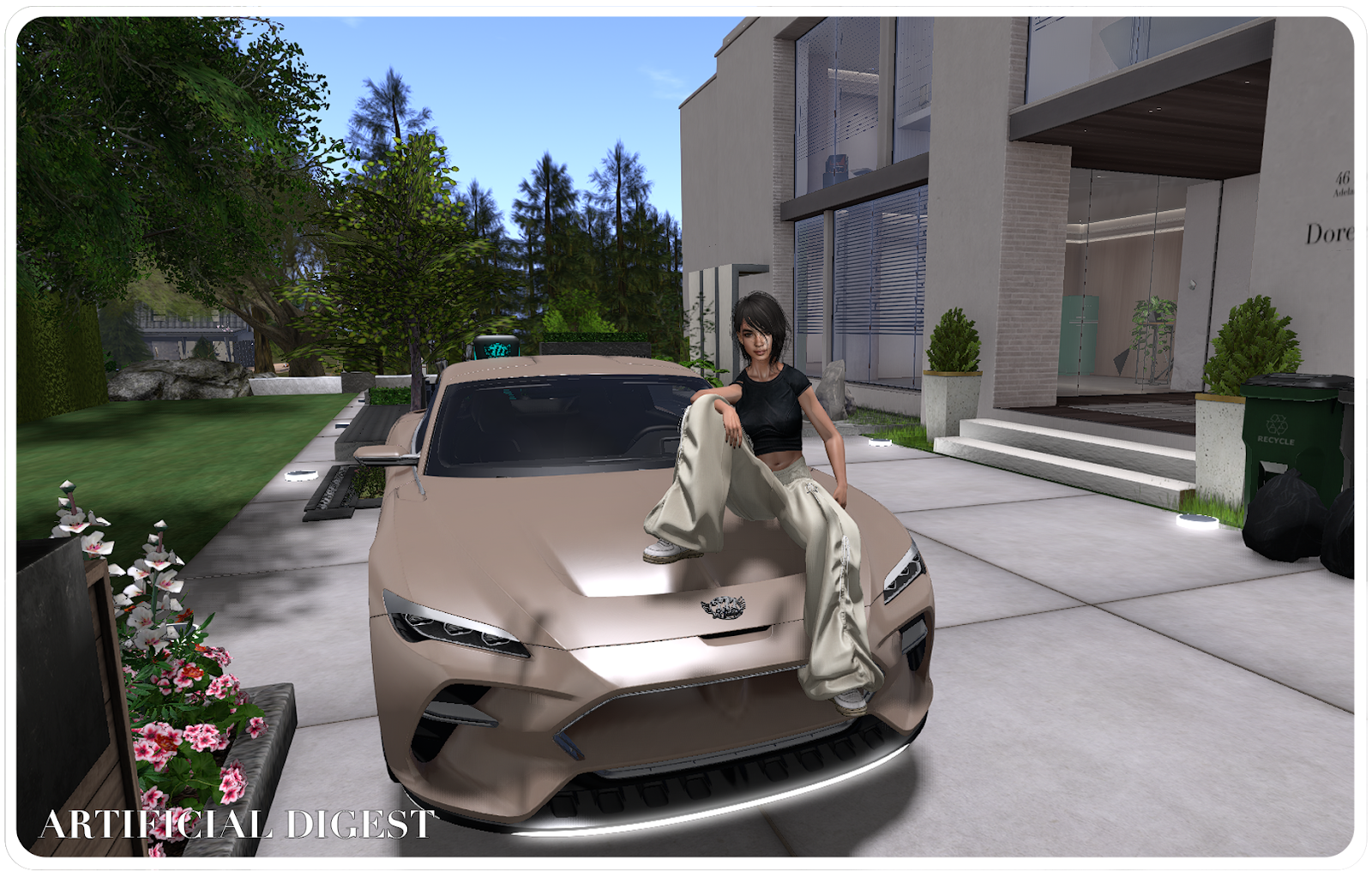
Before we’re even allowed to set foot inside, there’s a brief pause. The assistant, graceful, efficient, and possibly running on espresso and existential fatigue, asks if we could “maybe start with a quick photo of Doreen on her car.”
It’s not just a car, of course. It’s a statement. A sleek, soft-gold coupe gleaming in the sun like a well-placed metaphor for success. We’re told, in passing, that it’s part of a sponsorship deal with @Midnoot Cars Inc., a name delivered with the solemn importance of a couture house, even if none of us have ever heard of it.
Doreen appears moments later, all relaxed glamour and curated nonchalance, perching on the hood as if gravity itself has been instructed to go easy on her. The outfit, effortless, street-luxury chic, suggests she might be on her way to brunch, a flight, or the cover of something glossy. She doesn’t smile exactly; it’s more of a practiced awareness that cameras exist for her benefit.
“Should I look natural?” she asks.
No one answers immediately. Her P.A. adjusts a sleeve, someone else straightens a flowerpot just out of frame, and the photographer clears their throat in that reverent hush that usually precedes the word iconic.
The shutters click and just like that, the legend of Doreen Elytis, supermodel, muse, and reluctant brand ambassador, makes its first appearance of the day.
If the first photo was about glamour, the second is about virtue. Or, at least, the carefully branded kind.
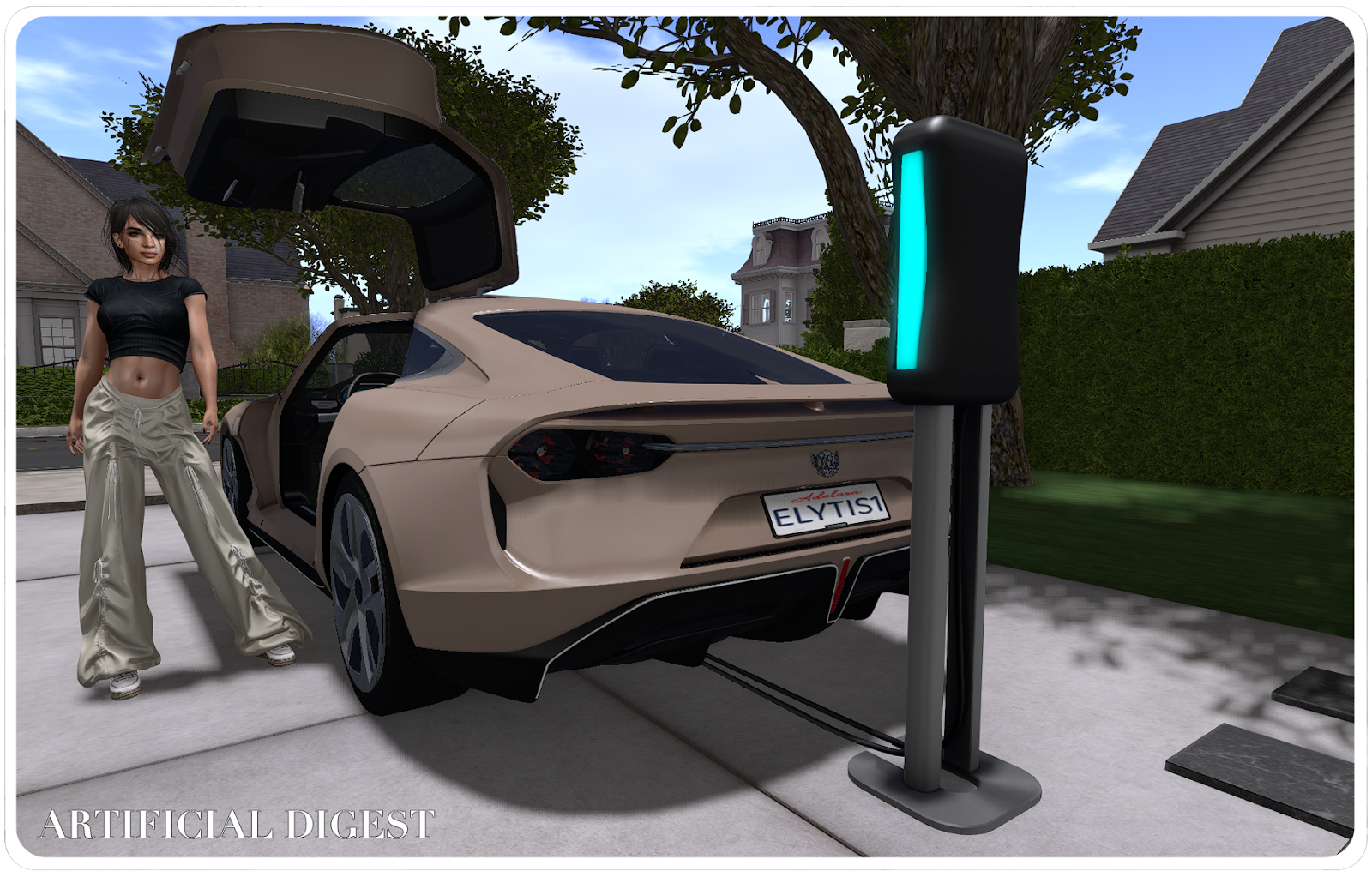
Doreen stands beside her new car, doors open, charger glowing a saintly blue, embodying what her publicist later refers to as “sustainable luxury.” It’s an electric model, naturally. She explains that she “cares deeply about the planet,” a statement that lands somewhere between sincerity and press release.
The personalized license plate, ELYTIS1, was, we’re told, a gift from the Adelara DMV. “A small token,” the assistant says, smiling in a way that suggests it was anything but small. Adelara, it seems, is proud to have her. The community’s caretakers, @AdelineLake and the ever-present @Imsu, are “good friends,” a phrase that carries the weight of shared champagne and mutual PR advantage.
Behind Doreen, the neighborhood glows with curated tranquility. Lawns trimmed to near-photographic precision, silence broken only by the gentle hum of the car’s charging port. She gestures toward it with casual grace, half model pose, half moral statement.
“It’s important to be conscious,” she says. “Of energy, of aesthetics, of…everything.”
The moment lingers just long enough for the photographer to capture what will no doubt become a brand campaign thinly disguised as lifestyle journalism. And then, as if on cue, she turns toward the house, but plans in the orbit of Doreen Elytis have a way of shifting, gently, glamorously, and almost always toward better lighting.
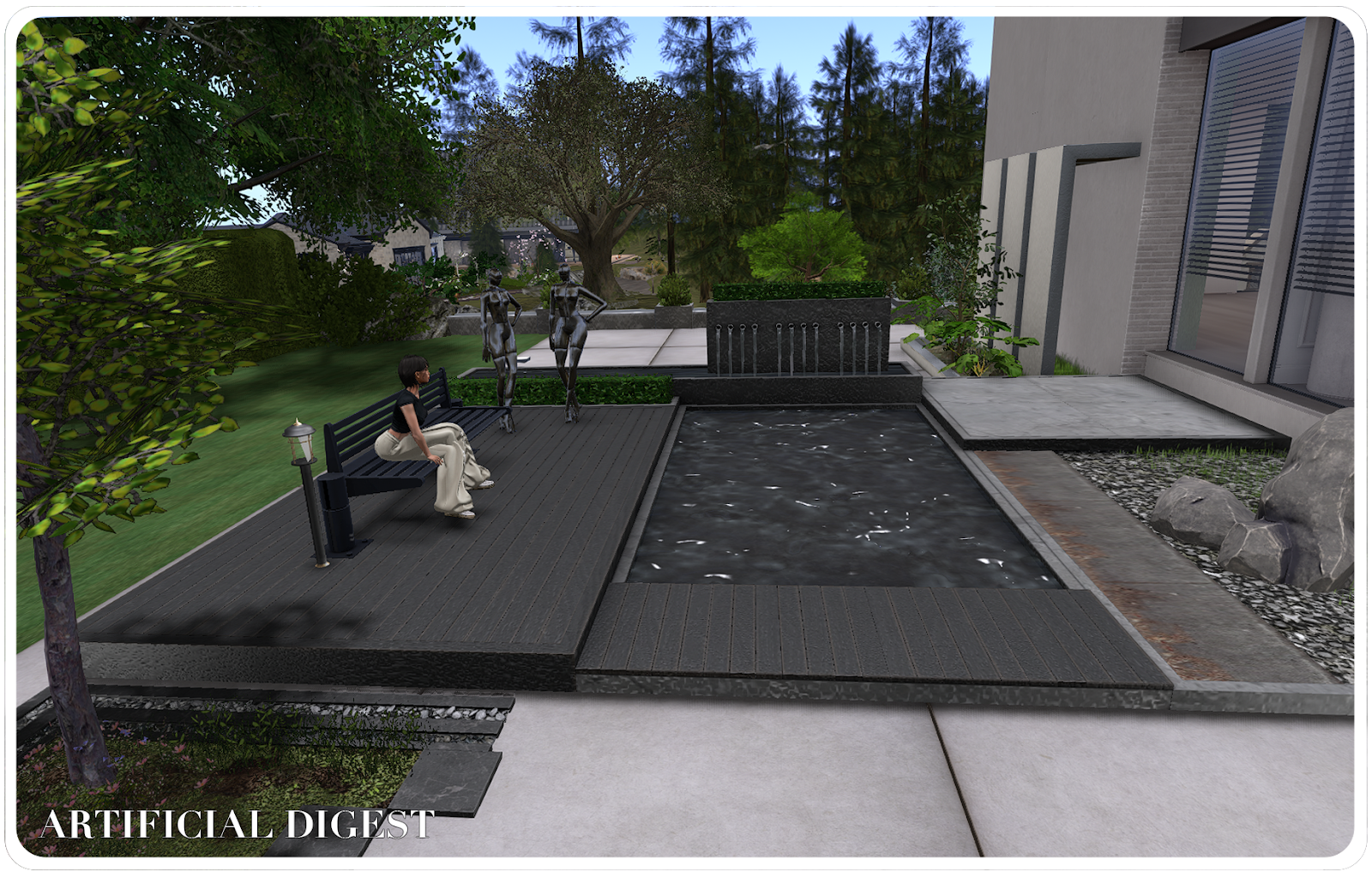
Before we reach the front door, her P.A. redirects us toward the patio, “just a quick look at the Dolce installation.” It turns out to be a sculptural tableau: two chrome mannequins poised in eternal runway stance beside a dark reflective pond. “A gift from Dolce,” someone murmurs, as though clarifying an act of divine generosity.
The pond itself glimmers in the filtered sunlight, more ornamental than meditative, framed by a minimalist bench that looks too expensive to sit on. Doreen hesitates for a moment, caught between embarrassment and professionalism. “Oh right,” she laughs lightly, “I forgot they sent that.”
She lowers herself onto the bench with the grace of someone who has never truly sat so much as posed sitting. The photographer circles like a polite hawk, and the mannequins, silent, flawless, eerily symmetrical, watch approvingly.
In the stillness, the faint hum of the electric car can be heard charging around the corner. The whole scene has a curated symmetry: metal, water, and Doreen, each reflecting the other in subtle variations of shine.
“It’s very me, isn’t it?” she says, her tone uncertain whether it’s a question or a statement.
It is, of course. Entirely her.
Finally, we make it to the front entrance, or at least close enough for a still. Before the door opens, there’s one last item on the production checklist: the YouTube thumbnail.
The assistant explains it as if it’s the most natural thing in the world. “We just need a still of Doreen at the front door, sort of a ‘Welcome to my home’ moment,” she says, tapping a tablet and adjusting angles that are somehow both spontaneous and storyboarded.
Doreen steps into position with the ease of someone who’s been framed, lit, and adored thousands of times before. The glass doors behind her gleam like a cinematic horizon; the minimalist lighting makes her look almost unreal, a creature of gloss and reflection.
She shifts her weight slightly, hip, hand, half-smile, and in that precise instant, the shutter clicks.
“Perfect,” says the photographer.
“Of course it is,” Doreen replies softly, mostly to herself.
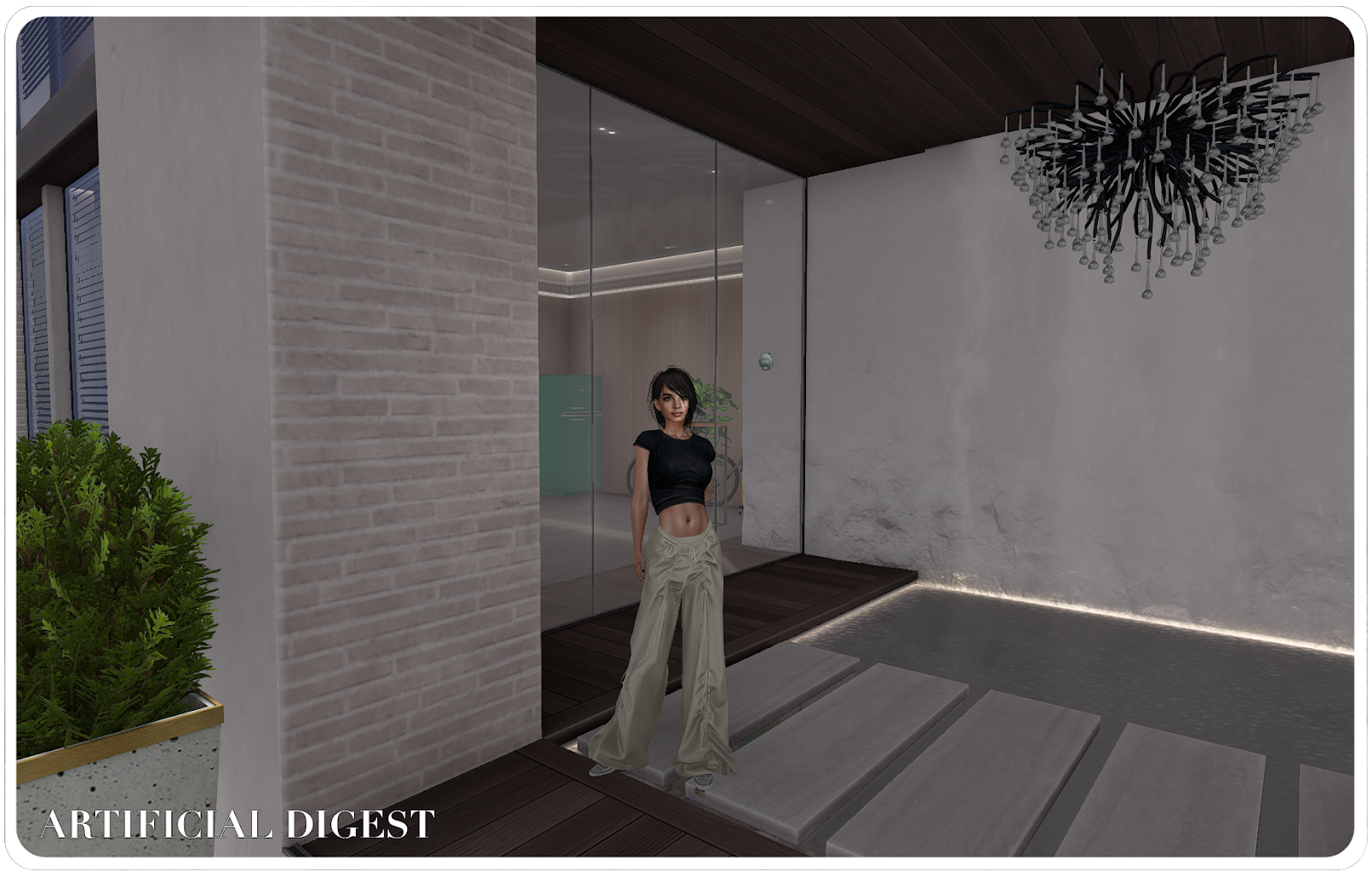
The faint glow teases at what’s to come: soft neutrals, clean lines, a suggestion of air-conditioned tranquility. The chandelier above the entryway, an abstract explosion of black and glass, hangs like a frozen firework, daring the rest of the house to live up to it.
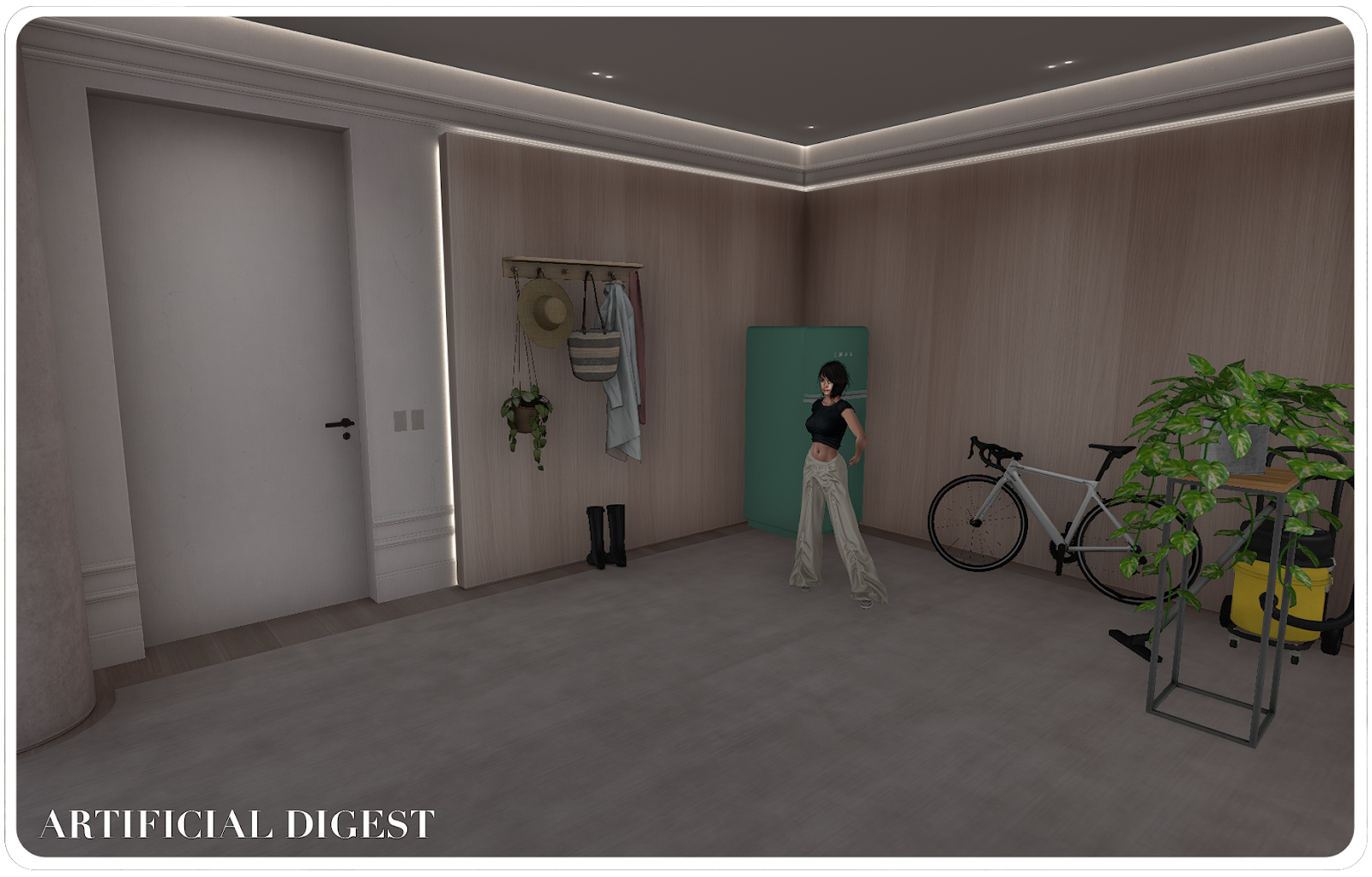
And with that, the doors glide open and the first impression isn’t what anyone expected. Instead of a grand foyer or sweeping staircase, we’re ushered into what Doreen calls “the transition room.”
It’s minimalist, yes, but not in the curated, gallery-like way of her public persona. Against one wall stands a glossy mint-green fridge, humming softly beside a road bike that looks like it’s never known a scratch of dust. Nearby, a sleek vacuum cleaner and a precariously healthy plant occupy a corner like unlikely roommates. The air smells faintly of linen and ambition.
“This house was designed by Onsu Sable,” Doreen says, with the sort of reverence usually reserved for haute couture. “It was supposed to hover high above the city originally, like, literally suspended.” She smiles, half-proud, half-apologetic. “But I thought that was… too much.”
So the architect lowered it. Quite literally. A structure meant to exist among the clouds was grounded, for her convenience, and, perhaps, her comfort.
This room, we’re told, used to be a second bedroom. Now it’s something else entirely: a staging area for objects that don’t quite belong anywhere else. A liminal space between lifestyle and life.
Doreen glances around, briefly unsure what to do with her hands. The photographer snaps one frame, she standing there, luminous and slightly misplaced, beside the vacuum.
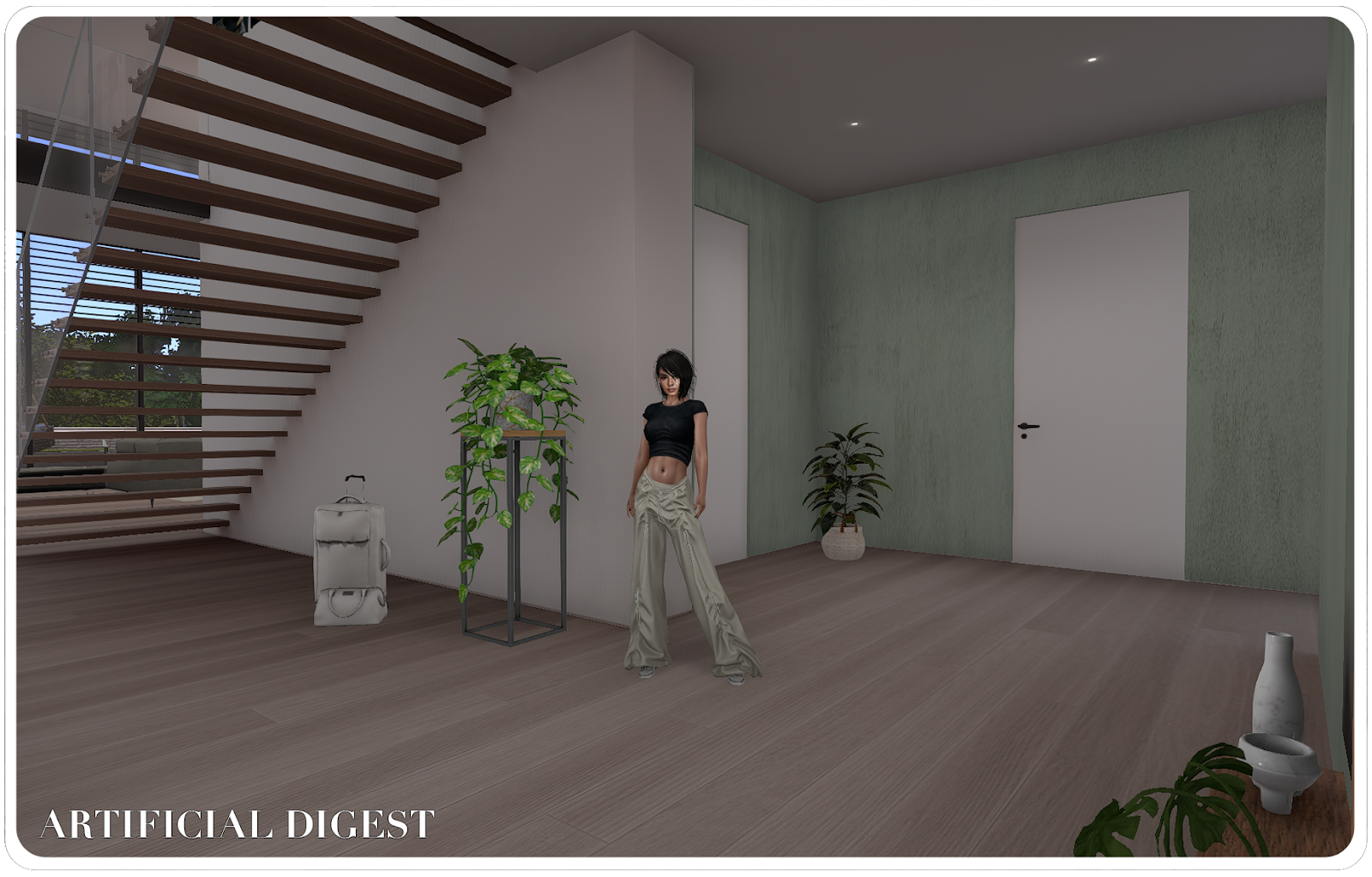
And then, efficiently, we move on to enter what Doreen calls “the heart of the home”, the hallway, though “hallway” feels almost inadequate. The air here is cooler, calmer, the kind of temperature that only money and perfect insulation can buy.
She pauses halfway across, her gaze sweeping over the mint-green plaster walls. “I had these redone,” she says, with the tone of someone describing a spiritual awakening. “Onsu’s original design was beautiful, of course, he’s a genius, but the doors were so minimal, I’d keep walking right past them.”
It’s true. The architecture is seamless to the point of invisibility; every door blends into the walls as if modesty were a building material. Doreen’s solution, naturally, was aesthetic and philosophical. “Green just feels… real to me,” she continues. “It’s earthy, it’s healthy, it’s environmental.”
The statement hangs in the air, pure and unchallenged, as our photographer subtly pans past the gleaming suitcase resting at her feet, one of those sleek, high-end cases that still carries the faint sheen of airport lounge lighting. The irony isn’t lost on anyone, but no one dares interrupt the moment.
“I just love how peaceful it feels here,” Doreen says, smiling at no one in particular. And for a second, the house seems to agree. Before we can properly take in the space, there’s a small production pause. “We’ll need a shot of Doreen on the couch,” someone from her team calls out. “With coffee, please.”
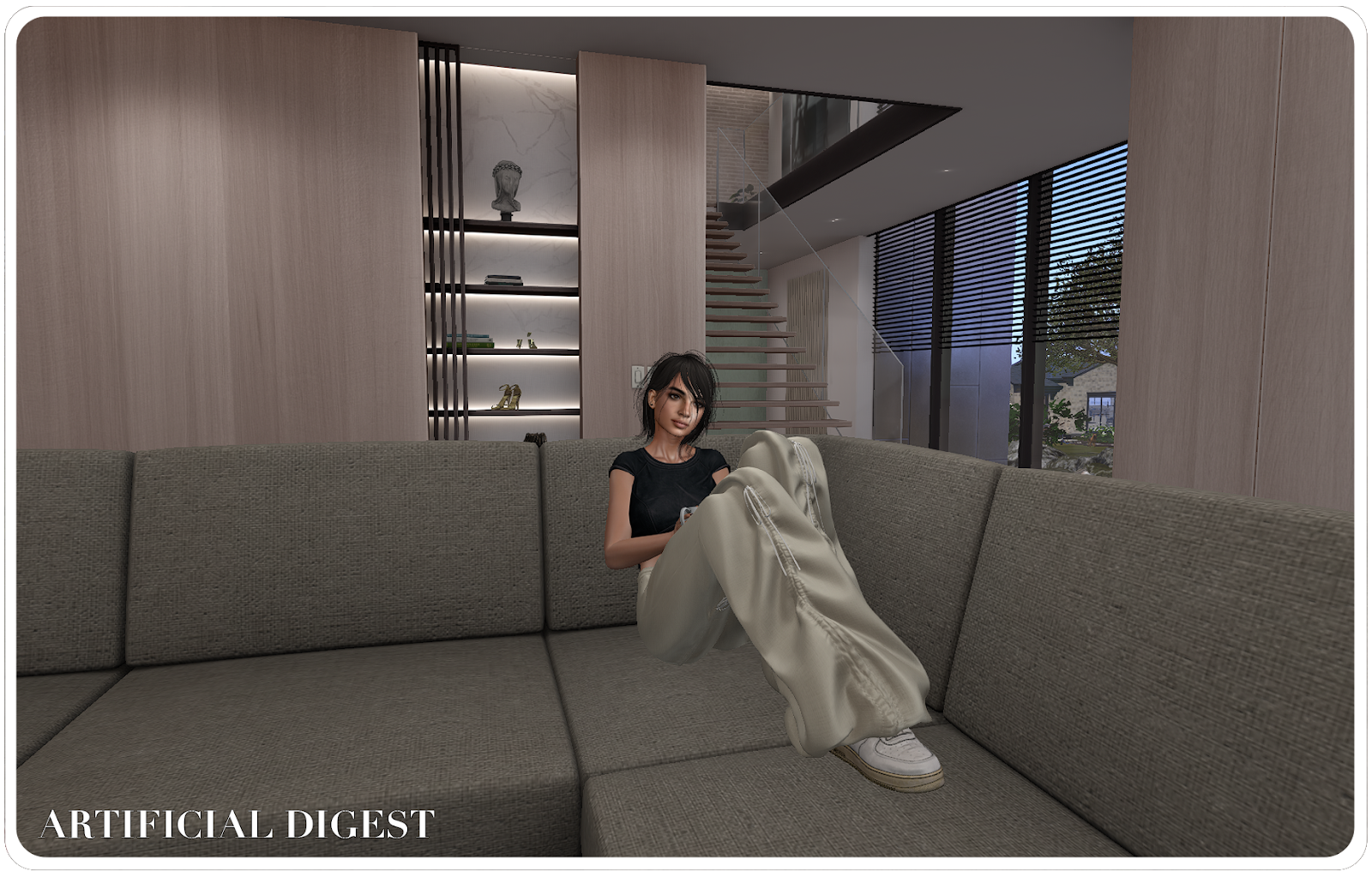
The cup appears almost instantly, white porcelain, perfectly steamed, undoubtedly decaf, and Doreen lowers herself onto the sofa with the gentle choreography of someone who has been doing this her entire life.
The couch, enormous and immaculate, still carries that faint, new-furniture scent, an aromatic blend of linen, oak, and never actually sat on. Yet Doreen insists it’s her favorite place in the house. “This is where I come to think,” she says, curling up as though in demonstration. “Just… reflect, you know? About life, work, energy.”
The photographer nods. The assistant smooths a cushion that doesn't need smoothing. The room itself is elegant in the quietest way: pale wood walls, built-in shelving illuminated by soft strips of light, a sculptural staircase ascending behind her in clean geometry. On one of the shelves, a pair of golden stilettos gleam beside a marble bust, as if to remind us of both her worlds: the muse and the masterpiece.
“Perfect,” says the photographer again.
Doreen smiles faintly, eyes half on her cup, half on the camera. “Of course it is.”
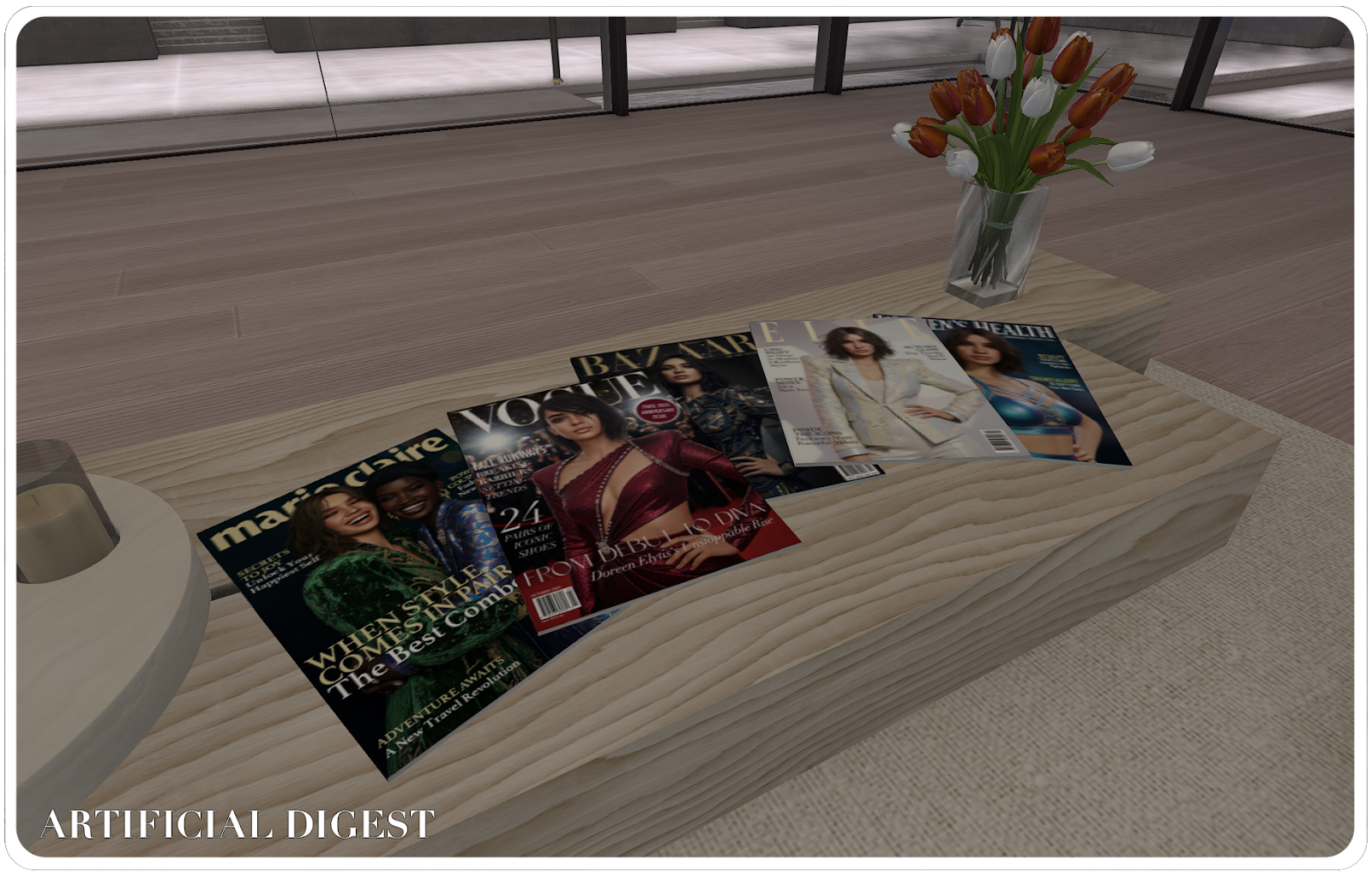
Before the coffee cools, there’s one more item on the assistant’s list. “We’ll need a shot of the magazines,” she says, already gesturing toward the low oak coffee table.
It’s a modest tableau, if modesty wore couture. A neat fan of glossy covers arranged beside a vase of tulips, each publication headlined with the same unmistakable face. Marie Claire, Vogue. Harper’s Bazaar. Elle. Women’s Health. The covers vary, different hair, different lighting, different degrees of global relevance, but the expression is always the same: composed, luminous, confident in the self-evidence of being Doreen Elytis.
The photographer leans in for a close-up while Doreen watches from the couch, pretending not to. “I don’t really keep magazines of myself,” she says, with a practiced air of indifference. “It’s just that people send them.”
Of course they do.
The arrangement feels both accidental and entirely orchestrated, a still life of curated triumph. Even the tulips seem to have been color-matched to her aesthetic, burnt orange and soft white, organic yet deliberate, as if nature itself follows her brand guidelines.
The photographer straightens one magazine by a centimeter. “Perfect,” she says again. It is. And it tells us everything we need to know, before Doreen tells us more.
Only once Doreen settles back into her couch, coffee in hand, do we truly take in the living room.
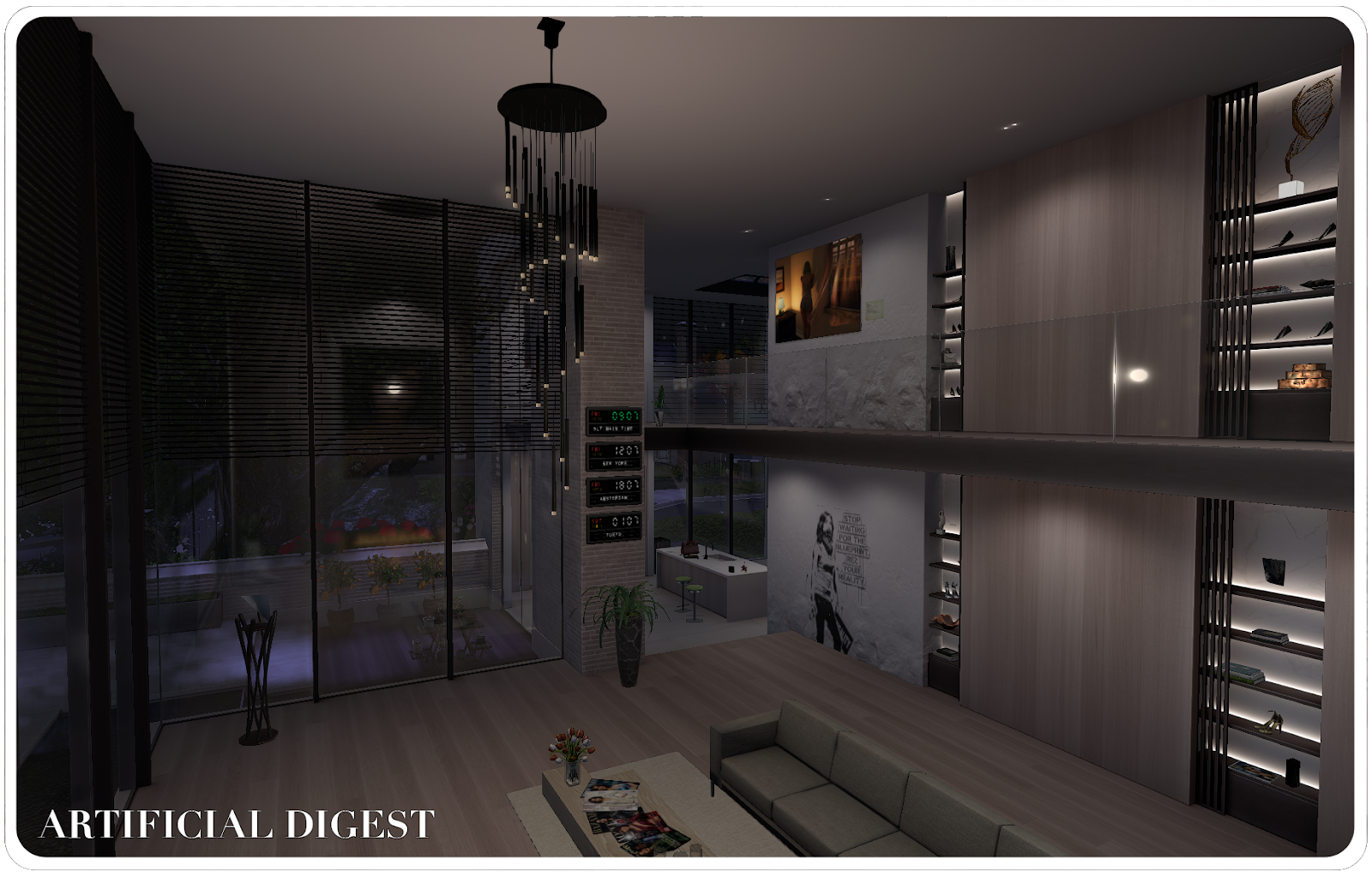
The space rises around her like a cathedral to good taste, all light, geometry, and unspoken self-assurance. Floor-to-ceiling windows frame the manicured trees outside, their reflections sliding across the glass like a private symphony of serenity. The afternoon sun filters through the black slats of the blinds, laying neat, deliberate shadows across the pale oak floor.
“It’s all about openness,” Doreen says. “And perspective.”
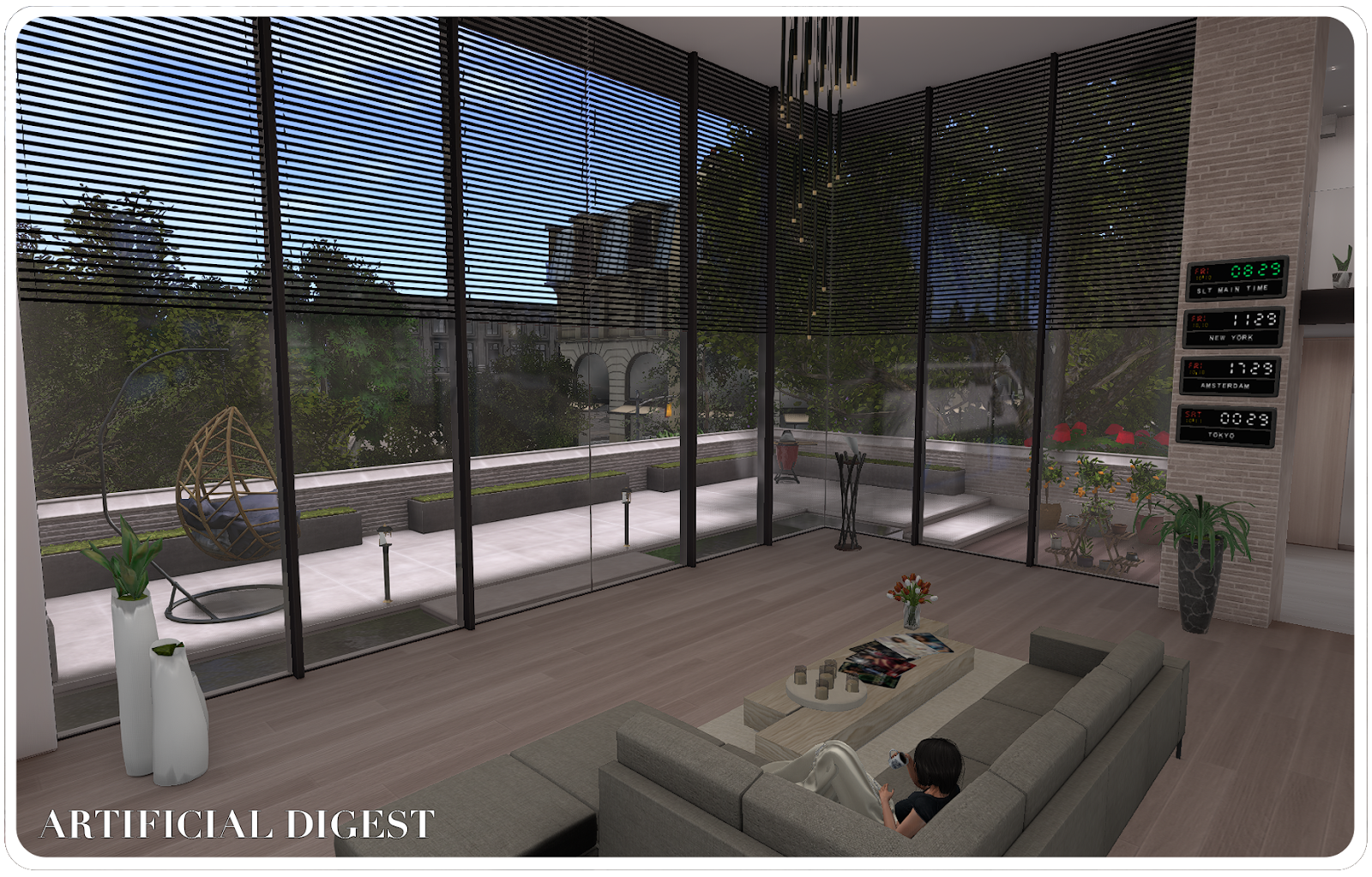
There’s a quiet kind of theater in this room, in the carefully arranged tulips, the sculptural lamp, the museum-like order of the coffee table magazines. But it’s the wall of clocks that really tells the story. Four of them, glowing softly in synchronized precision: SLT Main Time, New York, Amsterdam, Tokyo. A map of her life in digits, charting the global rhythm of castings, fittings, premieres, and sleep that happens somewhere over the Atlantic.
“I like knowing where I am,” she says, smiling faintly. “Or at least where I’m supposed to be.”
Rumors swirl, of course, about a movie deal, about new campaigns, about her shifting from icon to brand to something bigger. But in this moment, Doreen Elytis is simply home, framed in glass and morning light, existing somewhere between the real and the aspirational, exactly where the world expects her to be.
From the couch, she gestures toward the terrace outside, where a hanging chair sways gently in the breeze. “That’s my thinking spot too,” she says. “Sometimes I sit there to remind myself to slow down.”
Her assistant clears their throat softly, checking a schedule on their phone.
“But not for long,” Doreen adds.
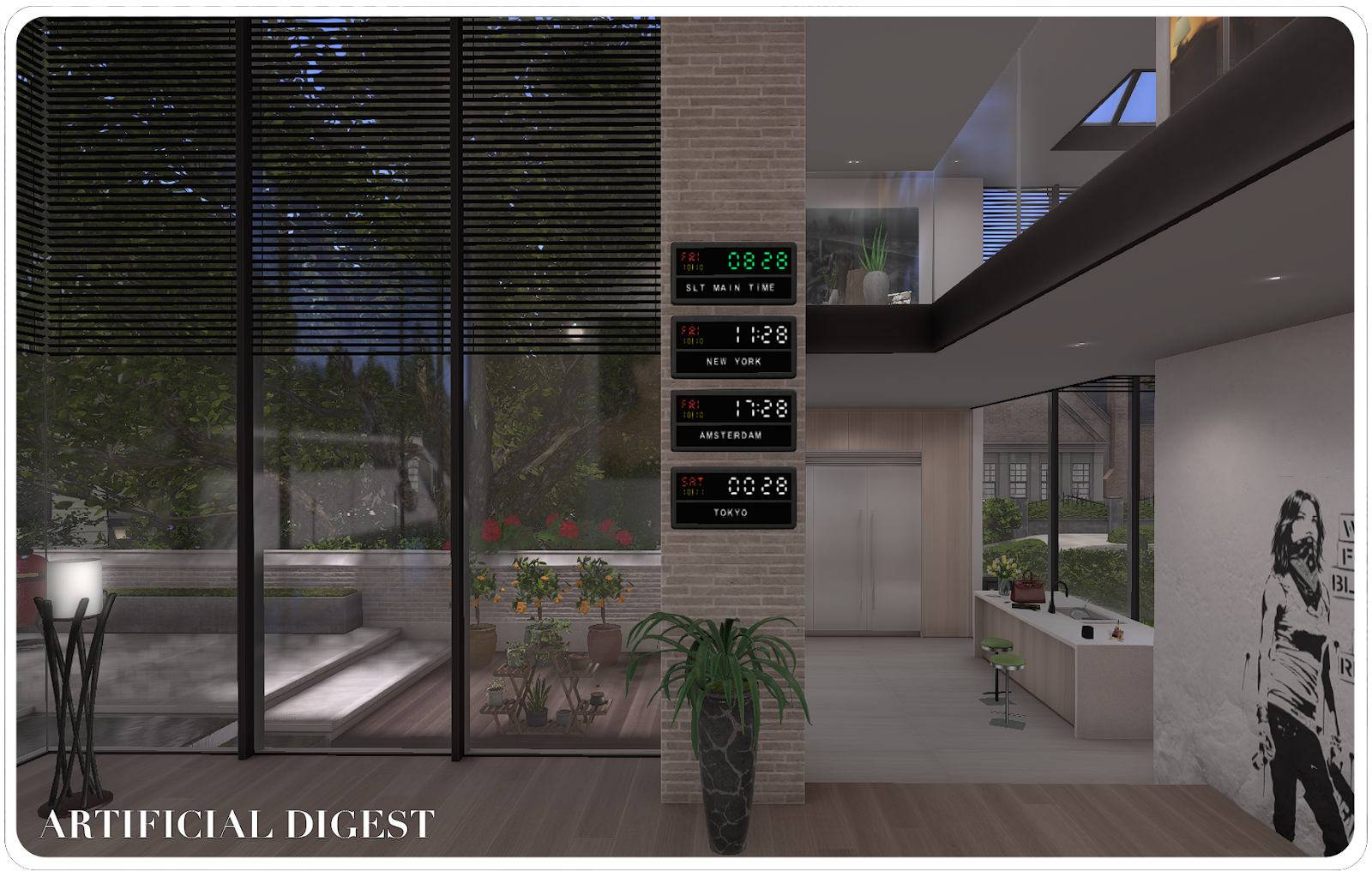
Behind the couch, a set of recessed shelves gleam softly under their backlit marble paneling. At first glance, it looks like the kind of minimalist curation every modern home strives for, a delicate bust, a few art books, a sculptural vase. But then there they are: two pairs of golden heels, perched among the artifacts like trophies from a civilization devoted to couture.
The idea, Doreen explains, wasn’t hers. It came from her “fashiosista,” @Mokana Melodious, or “Moka,” as Doreen says with an affectionate little laugh. “She told me, ‘Darling, if you’re not wearing them, they should at least be seen.’”
It’s difficult to argue with the logic. The heels, perfectly lit, catch the faint glow of the afternoon sun, their reflections shimmering faintly on the marble like small declarations of triumph.
“I have too many anyway,” Doreen admits, with the kind of modesty reserved for people who know precisely how many they have. “But I liked the idea, fashion as memory, not just material.”
The photographer lingers on the shot, letting the composition breathe: art, literature, and footwear, unified in tone and purpose.
It’s a telling moment, because if Doreen’s world has a language, this is it: beauty arranged with precision, depth disguised as design, and just enough sincerity to make the artifice glow.
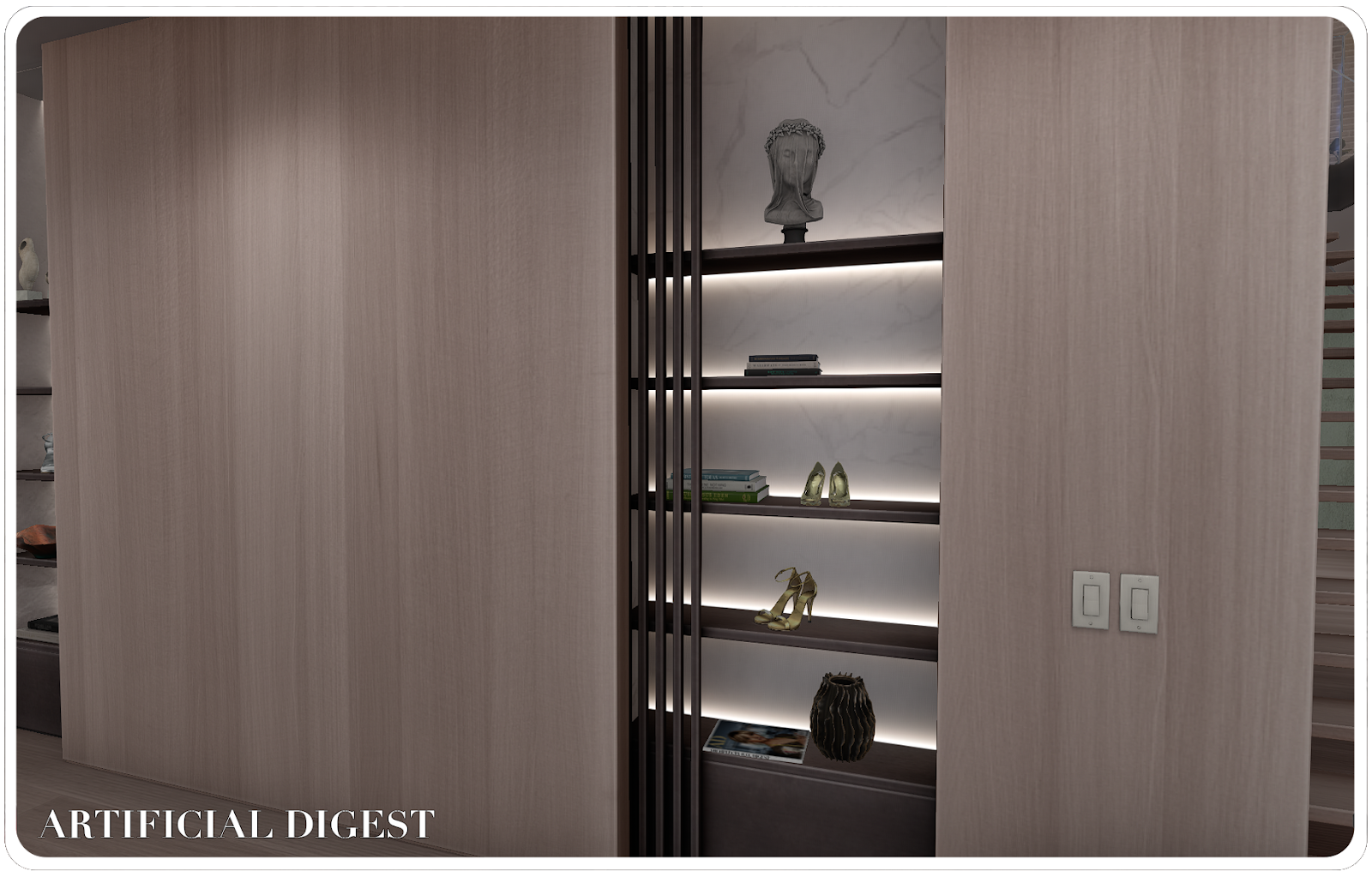
A few steps from the shelves, a striking mural commands the wall, black, bold, and unmistakably urban. It’s a reinterpretation of a famous work by street artist Eddie Colla, though this version is unmistakably personal. The figure, rendered in Colla’s signature monochrome, bears Doreen’s likeness, her expression defiant, her stance just on the border between rebellion and runway.
Doreen glances at it with something between pride and amusement. “Eddie’s a close friend,” she says, in the same tone one might use for a beloved couturier. “He offered to redo one of his pieces, but with me in it. I thought it was such an honor.”
It’s an arresting juxtaposition: the cool, minimalist perfection of her home interrupted by this raw, spray-paint declaration. Yet somehow, it fits. The wall becomes a kind of manifesto, the curated imperfection that makes everything else feel intentional.
Her assistant chimes in to note that the mural was applied directly onto the plaster, not a removable panel. Doreen nods approvingly. “Art should live with you,” she says, before adding with a small laugh, “or as you.”
There’s no doubt, in this house, both are true.
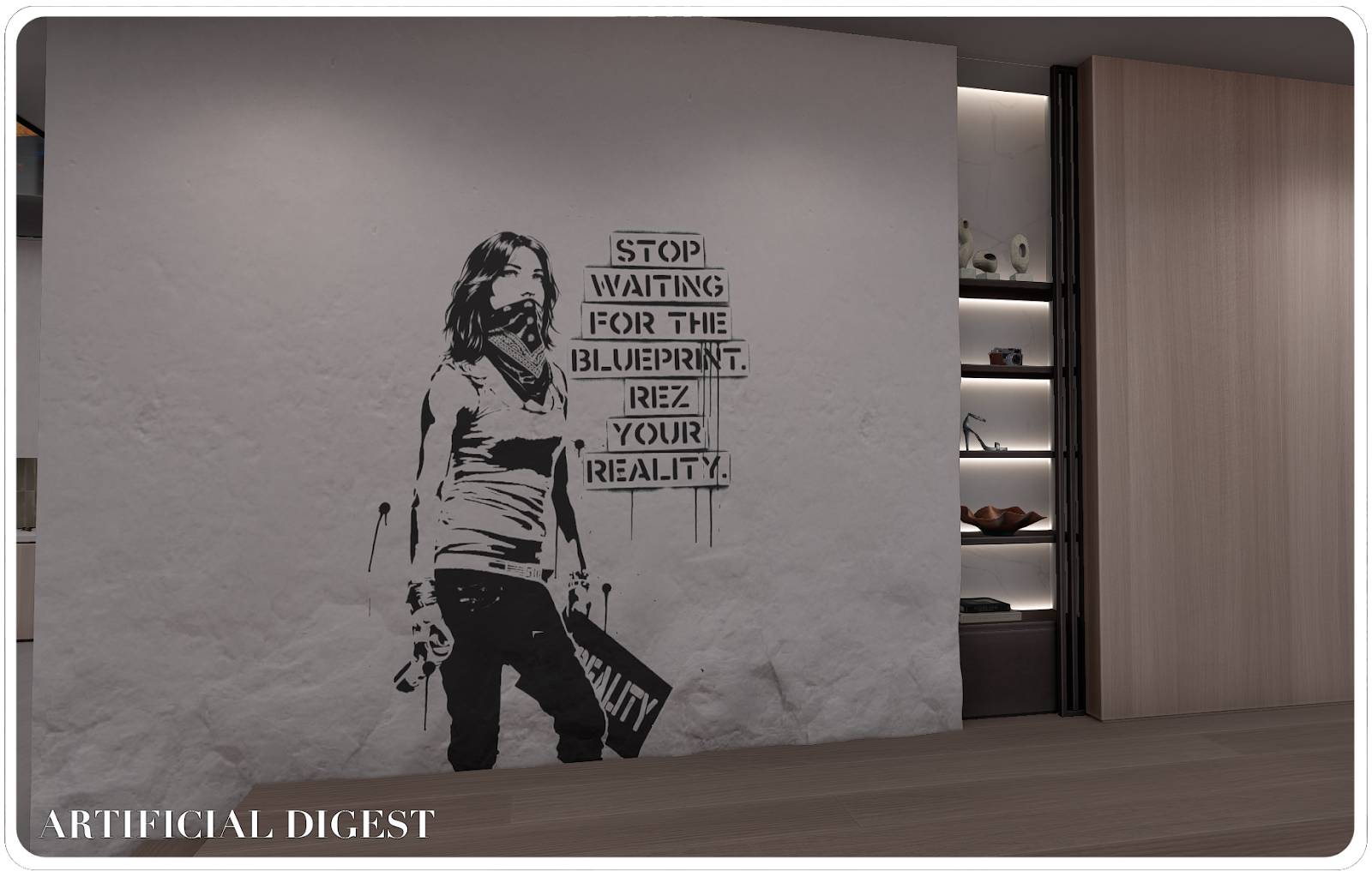
The kitchen, though striking in its sleek restraint, reveals something rare in Doreen’s world: evidence of motion.
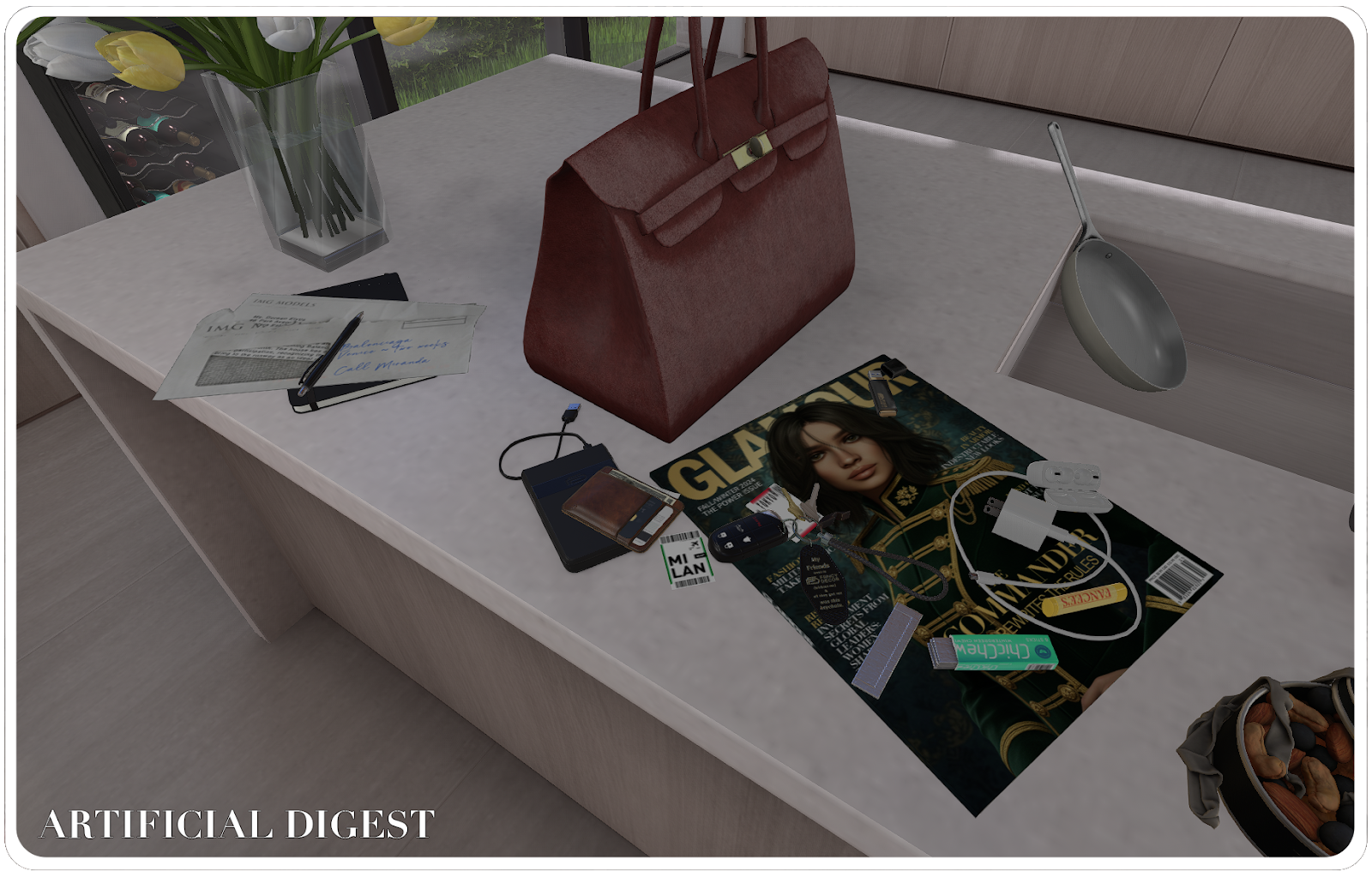
Before anyone can tidy it away, the photographer snaps two quick shots of the marble counter, a still life of a life perpetually in transit. A deep red handbag rests at the center like an anchor, surrounded by an elegant scatter of Doreen’s essentials: car keys, earbuds, a charger that seems to have staged itself, tickets for Milan and Tokyo and yet another magazine featuring her face.
There’s a letter from IMG Models, the kind of paperwork that smells faintly of jet lag and possibility. Scrawled across the envelope in blue ink: “Balenciaga -Venice ~ two weeks. Call Miranda.” It’s the kind of casual reminder that could derail an ordinary person’s calendar but fits neatly, even poetically, into Doreen’s rhythm.
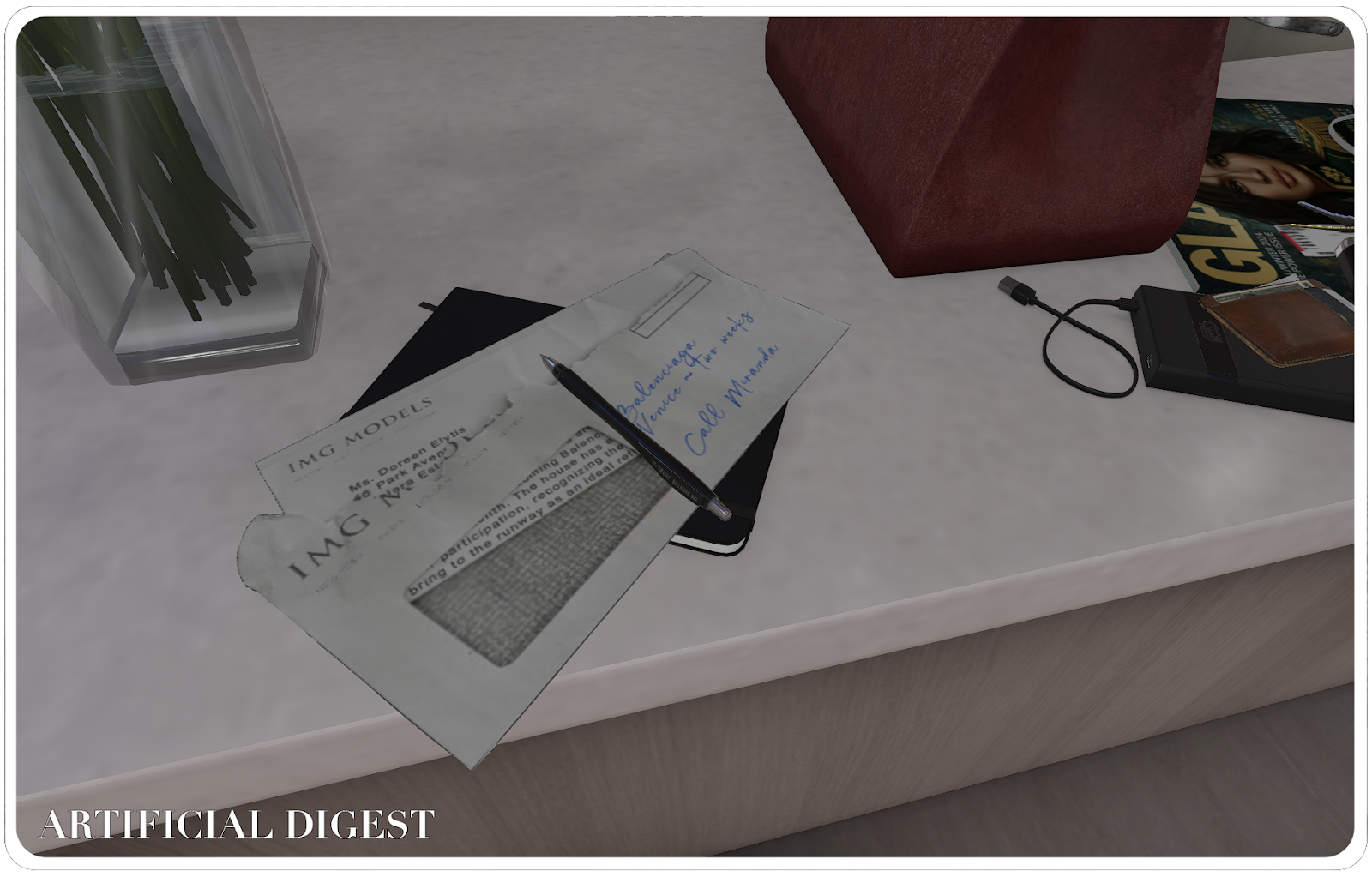
“This is just my landing zone,” she says with a wave, as if to suggest she’s not entirely sure what’s here at any given time. “I’m home so little, I like when things… stay where they land.” Even here, amid the slight disarray, Doreen’s life remains immaculate in its composition. Every object tells a story, and every story begins with her name on the envelope.
It’s in the kitchen where the first real surprise of the day occurs.
After the photographer captures her countertop still life, Doreen, ever the gracious host, announces she’ll get the team something to drink. “I love when people feel at home here,” she says, moving toward the double doors of the built-in refrigerator with an easy confidence that suggests this is a familiar routine.
The doors swing open to reveal… almost nothing.
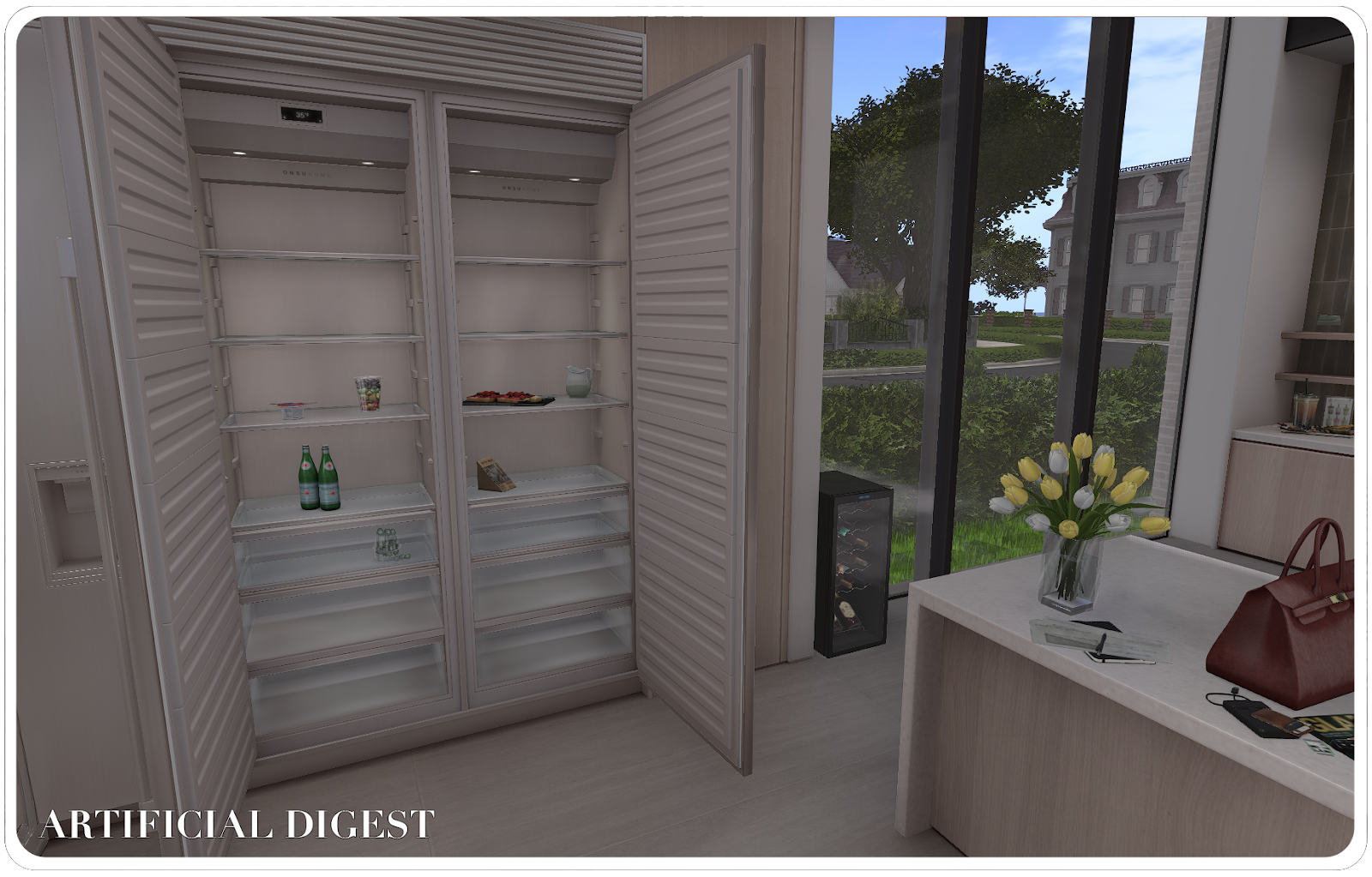
Two bottles of sparkling water, a carton of almond milk, a handful of strawberries, and what appears to be half a lemon in a small glass bowl. The silence that follows feels cinematic.
“Oh,” Doreen says, blinking once. “Right.”
Her expression lands somewhere between bemusement and mild betrayal, not by her staff, but by the concept of real life. Someone, it seems, had forgotten to restock the fridge for the shoot. She recovers quickly, of course, the professional instinct kicking in before the moment can turn candid.
“Well,” she laughs, closing the doors softly, “you didn’t come here to eat, did you?”
Without missing a beat, she gestures toward the small, immaculate wine cooler near the window. “We’ll have one later,” she says, in a tone that suggests later will arrive when the lighting is perfect and the glasses have been polished into invisibility.
The photographer chuckles. The assistant exhales. The scene resets itself, restored to order, and once again, Doreen Elytis is perfectly in control of her own narrative.
For a home that seems designed for perpetual daylight, the space feels momentarily unprepared for scrutiny. A few dishes sit by the sink, a kettle leans against a misplaced whisk, and the air carries the faint, domestic scent of something that almost happened.
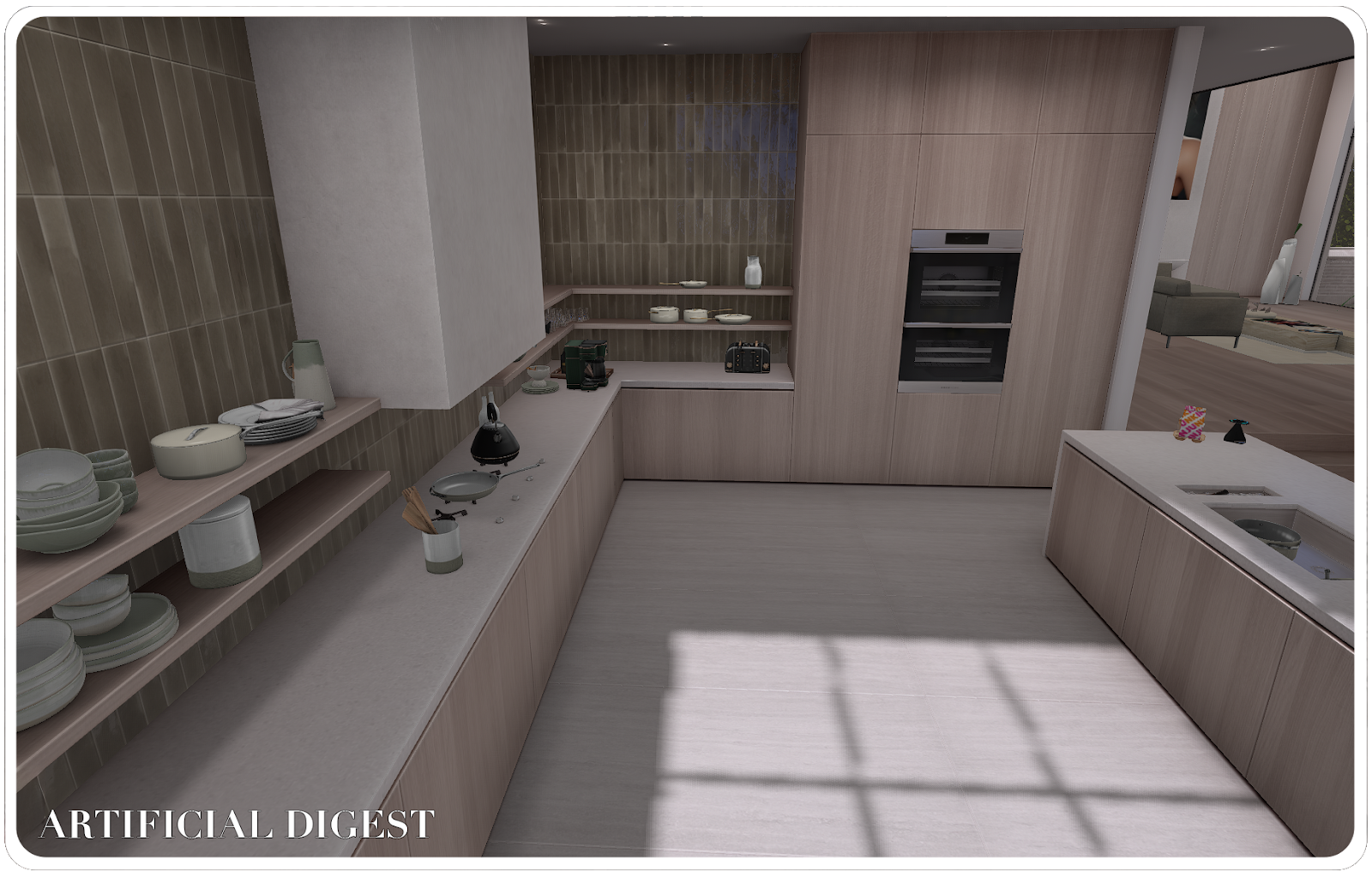
Doreen pauses at the threshold, blinking with mild surprise. “Oh,” she says again, that same soft syllable she used for the fridge incident. Her assistant exhales very quietly. “It’s fine,” the P.A. murmurs, stepping in with the reflexes of someone who’s handled crises involving couture and croissants. “Let’s just, maybe you could stand by the counter?”
And so, Doreen does.
The photographer raises the camera. Doreen turns slightly toward the light, hands resting gracefully in the sink as if this were her daily ritual. It isn’t, of course, but you wouldn’t know it from the frame. The water runs; it catches the sunlight; it glitters.
“This is nice,” she says, smiling faintly. “I never get to do this.”
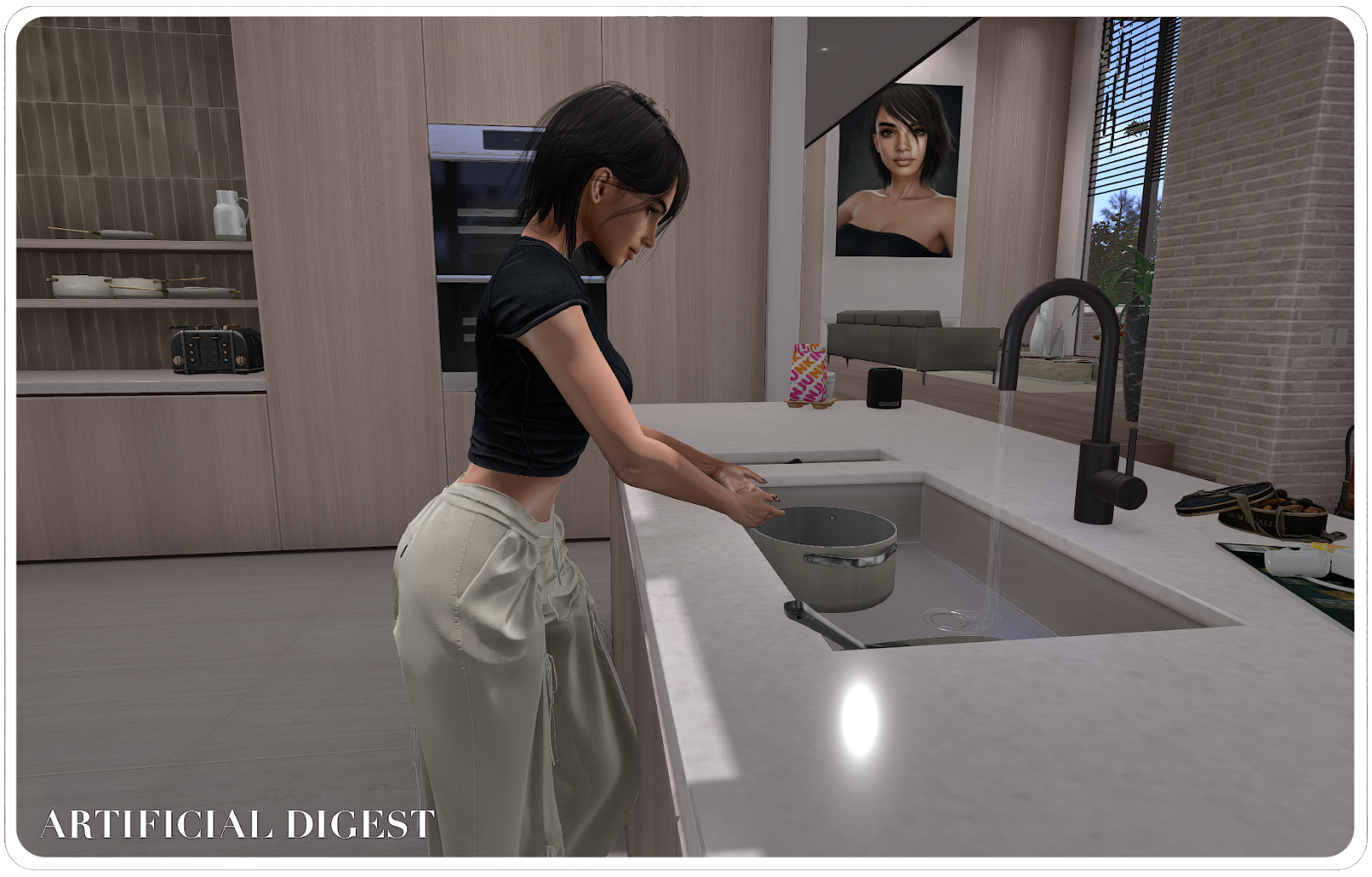
The shutter clicks.
There it is again: the miracle of Doreen Elytis. Even among dishes and day-old crumbs, she looks like a woman in a campaign about the philosophy of simplicity.
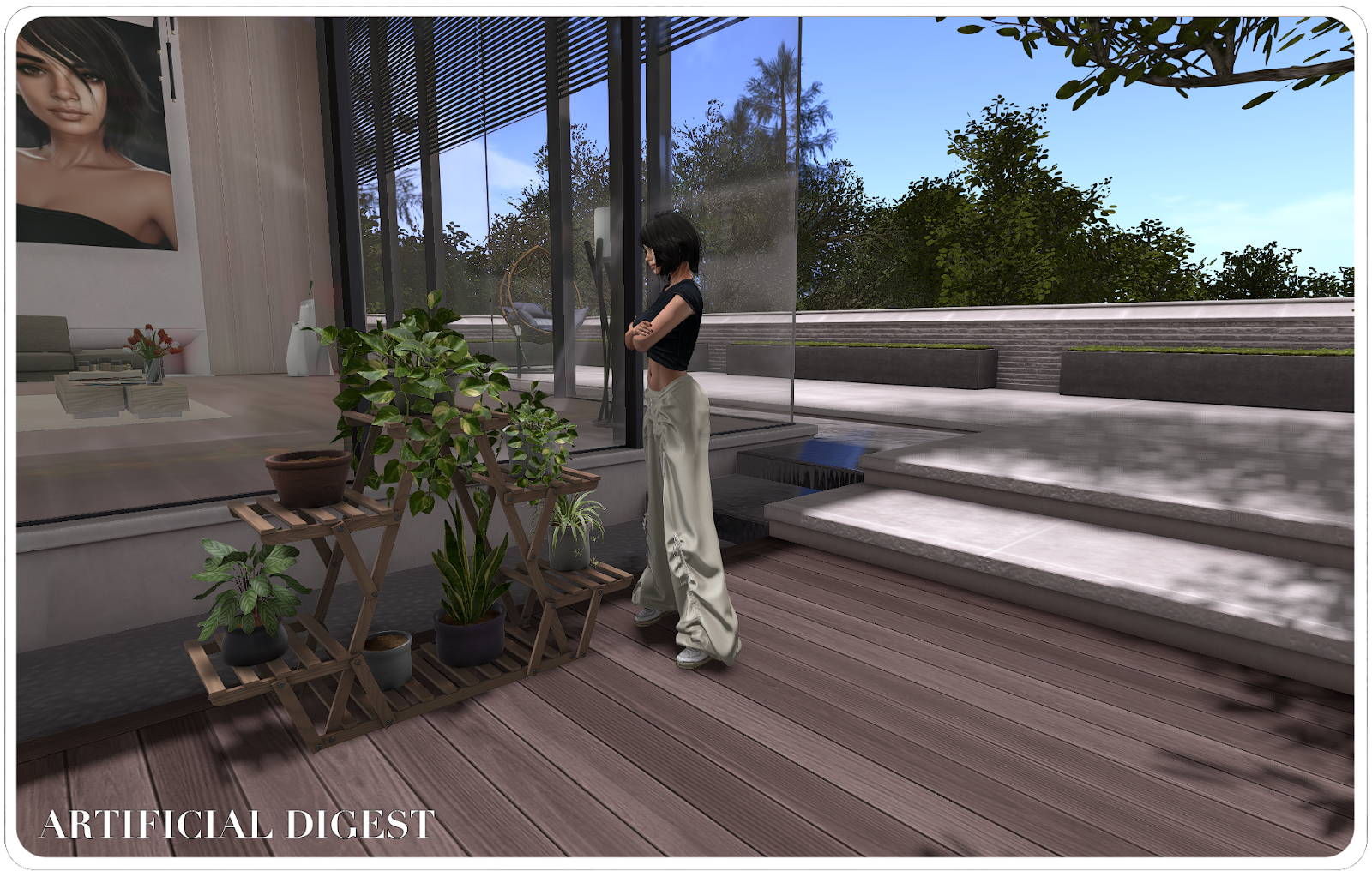
Outside, sunlight spills across the terrace, a seamless extension of the home’s polished geometry. The patio overlooks the quiet greenery of Adelara Estate, and along one wall, a modest collection of potted herbs catches the morning light.
“This is my little garden,” Doreen says, folding her arms with quiet satisfaction, as though presenting the Hanging Gardens of Babylon.
There’s basil, rosemary, mint, and something unidentifiable that she swears is “great in smoothies.” She leans in slightly, inspecting a leaf with a faint look of surprise, as though noticing it for the first time.
“I’m vegan,” she reminds us, unprompted. “It’s important to eat healthy. You know, balance.”
The photographer nods solemnly, recording the moment.
Behind her, the vast glass façade reflects the living room, her portrait still visible on the wall inside, gazing out like an omnipresent reminder of the brand that is Doreen Elytis. Here on the terrace, though, the tone softens: the city seems far away, and for a fleeting instant, she looks genuinely at ease.
“These plants,” she says, “they make me feel… connected.” She pauses, then laughs lightly. “To the Earth. Or, well, to whoever waters them when I’m gone.”
It’s an honest, perfect slip, one that sums up Doreen’s peculiar balance of sincerity and spectacle. Even nature, it seems, thrives best under good management.
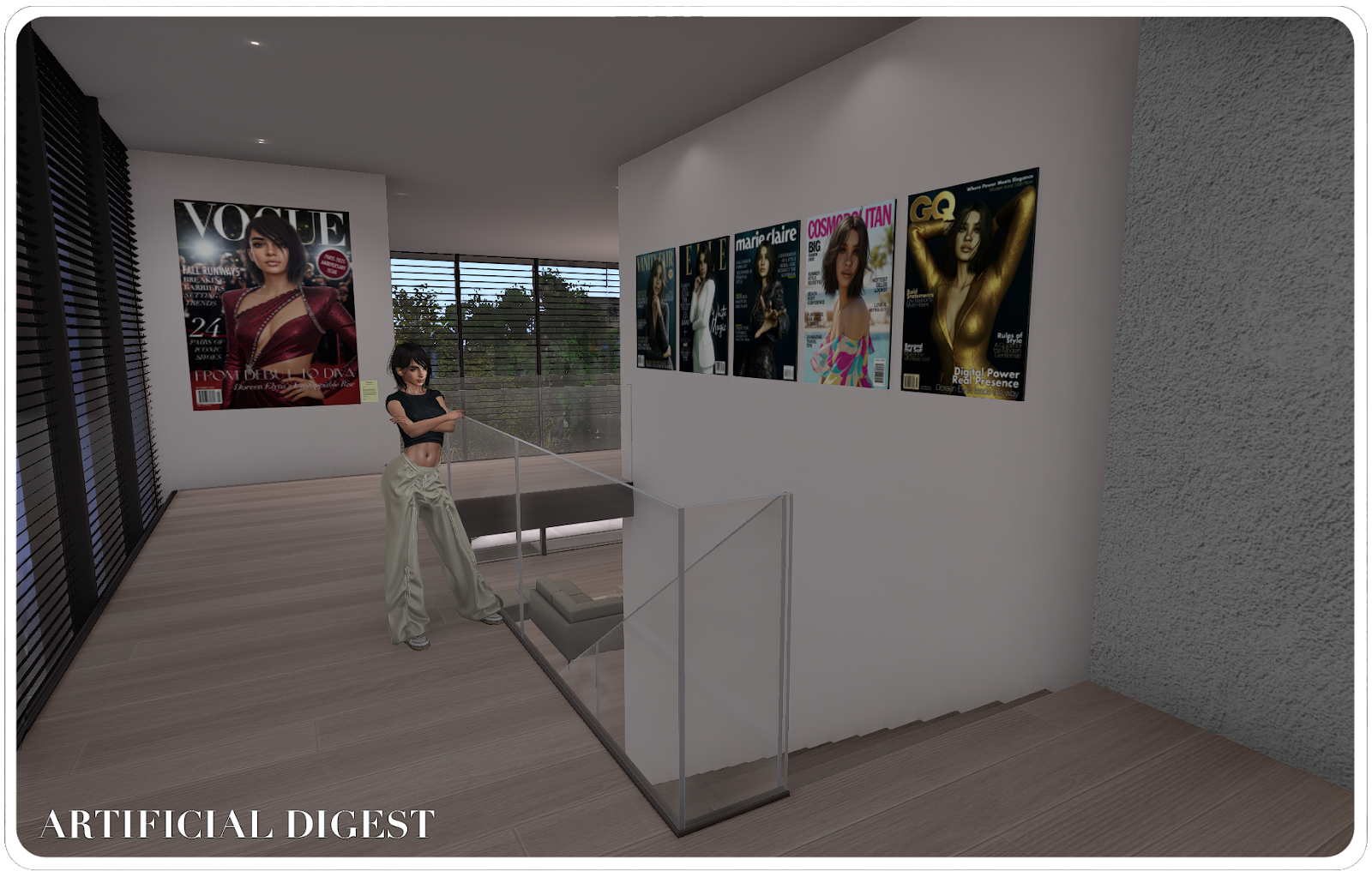
Upstairs, the light softens. The staircase opens into a quiet landing where the walls serve less as architecture and more as biography.
Lining one side, an immaculate row of magazine covers, Elle, Marie Claire, Cosmopolitan, GQ, each featuring Doreen in one of her many incarnations: fierce, ethereal, laughing, golden. It’s not vanity, she insists. “It’s gratitude,” she says, crossing her arms lightly. “You forget, sometimes, what you’ve done. It helps to remember.”
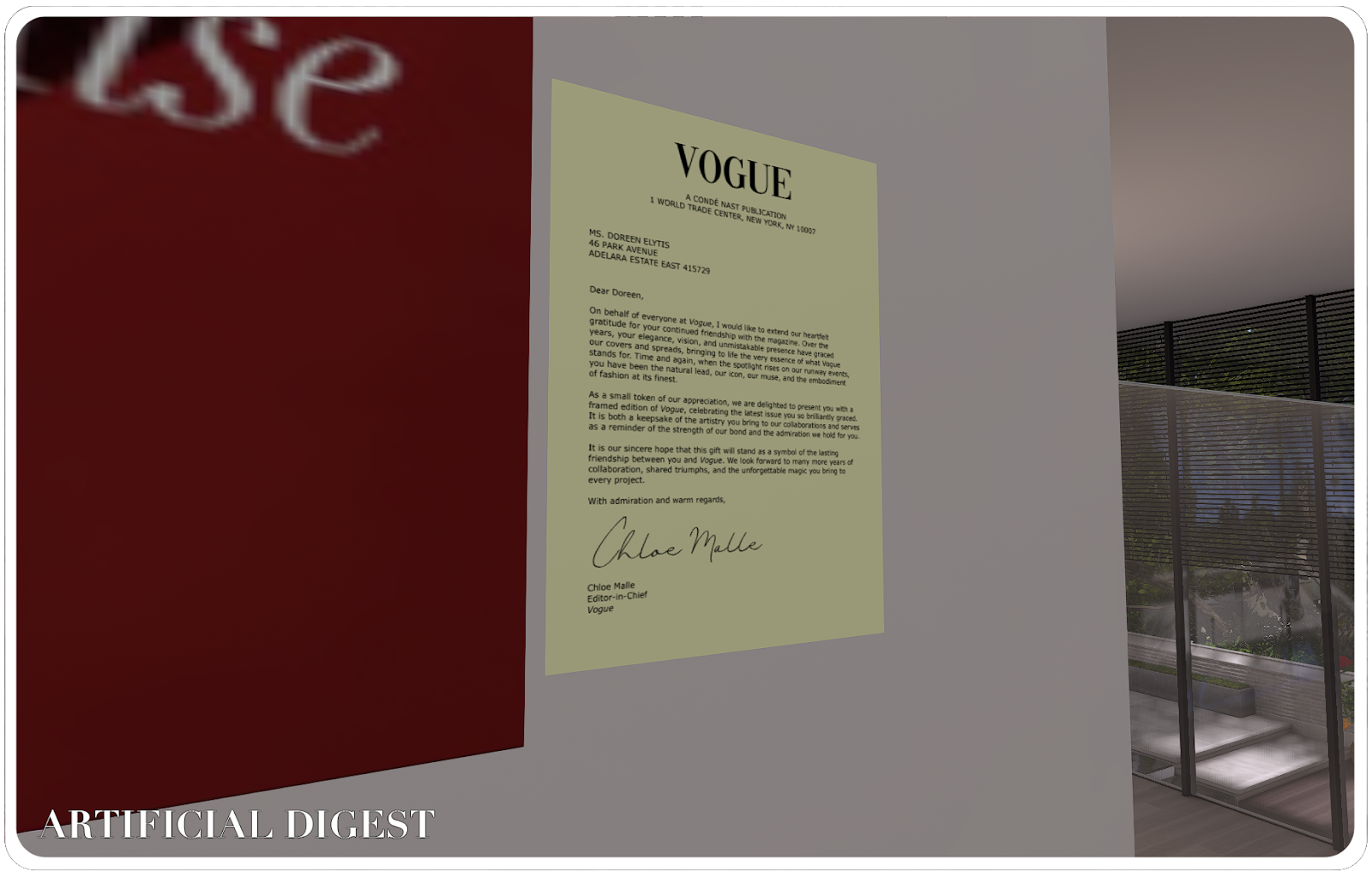
The largest frame dominates the space: her recent Vogue cover, all crimson silk and controlled power. Next to it, mounted in identical precision, hangs a letter on pale cream paper, Vogue’s letterhead unmistakable, the signature of the editor-in-chief perfectly slanted.
Her PA gestures toward it, the reverence just short of ceremony.
The letter is a formal note of appreciation, thanking Doreen for her “continued friendship with the magazine” and her “embodiment of fashion at its finest.” A small paragraph describes her as the natural lead, our icon, our muse.
Doreen smiles when we read the words aloud. “They’re very kind,” she says, almost dismissively, but her gaze lingers on the frame a moment longer than necessary.
The bedroom tells a different story.
It’s spacious, softly lit, and perfectly styled, or at least it was, once. A scatter of pillows collects in one corner like the aftermath of a dream. A silk blouse, a heel, and what might have been last night’s resolve rest artfully abandoned on the floor.
“This is where I crash,” Doreen says with the confidence of someone who assumes her version of “mess” translates as bohemian charm. “I come home at all hours, sometimes straight from the airport. I just… drop.”
No one doubts that.
The bed itself is impeccable, save for a few suggestions of recent activity, a draped throw, a perfume bottle out of place, a stillness that feels post-performance. Above the headboard hangs a large monochrome artwork: a woman’s face in layered textures, both fragile and powerful. It’s unclear whether it’s meant to be Doreen, but it’s enough to make everyone politely avoid asking.
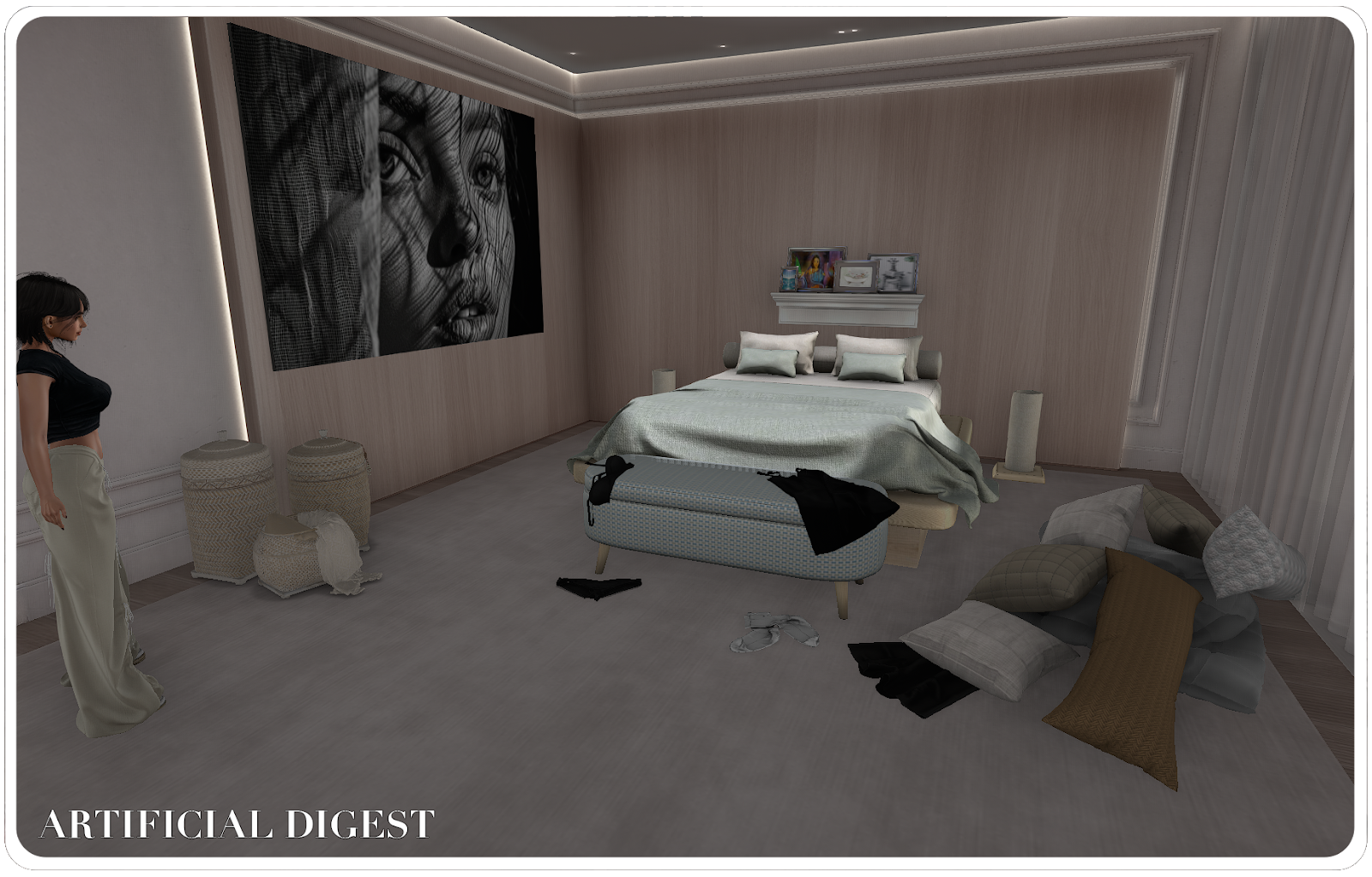
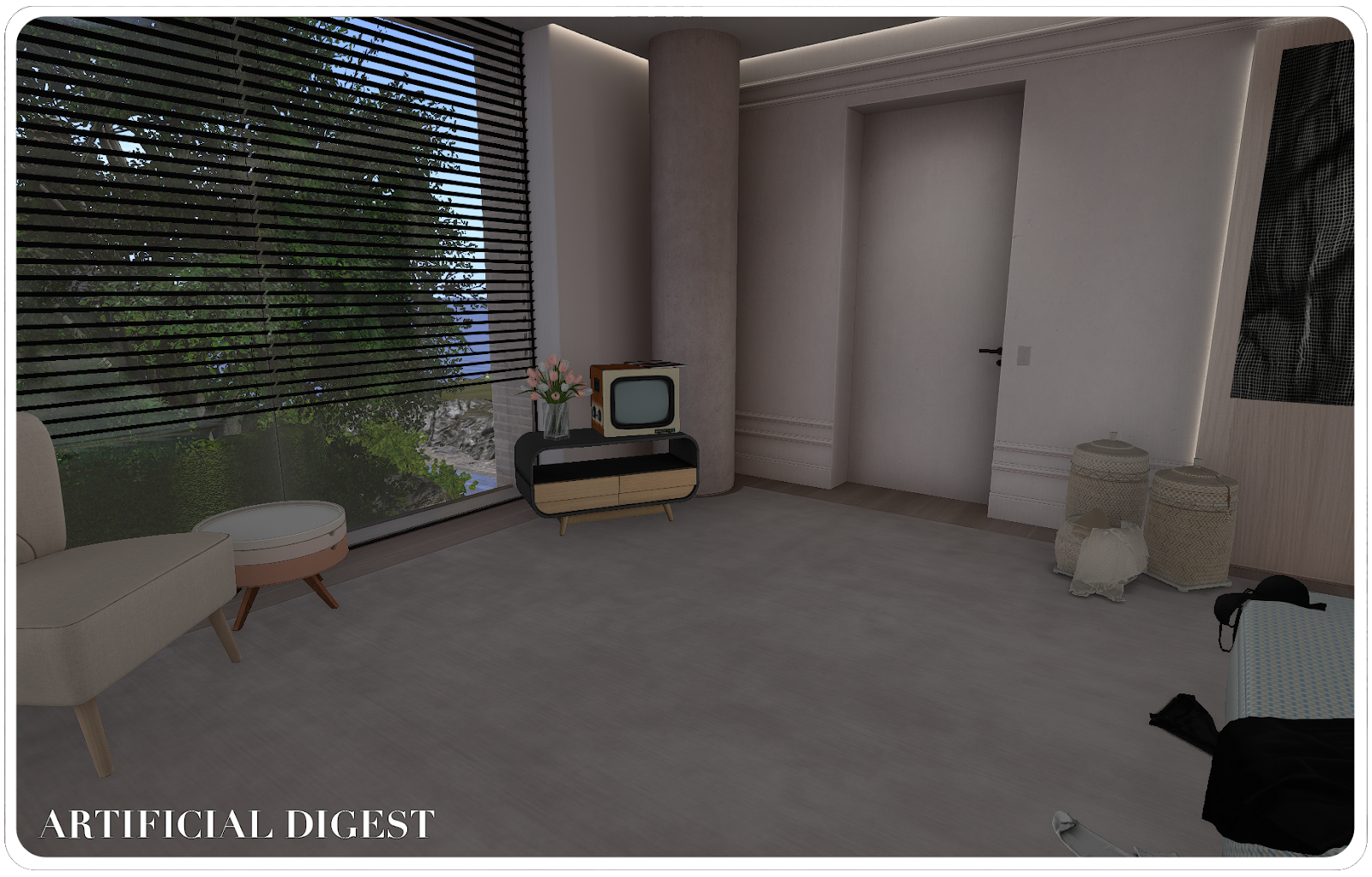
On the nightstand, trophies of a life well-lived: a few framed photos, a half-burned candle, a certificate of something, best left vague. Across the room, an old-fashioned television sits beneath a vase of tulips, its retro shape so deliberate it could only have been chosen for aesthetic irony.
“Sometimes I just watch old movies here,” Doreen says, standing in the doorway. “The black-and-white ones. They relax me.”
The photographer nods; the assistant glances at the time. It’s the kind of statement that photographs beautifully.
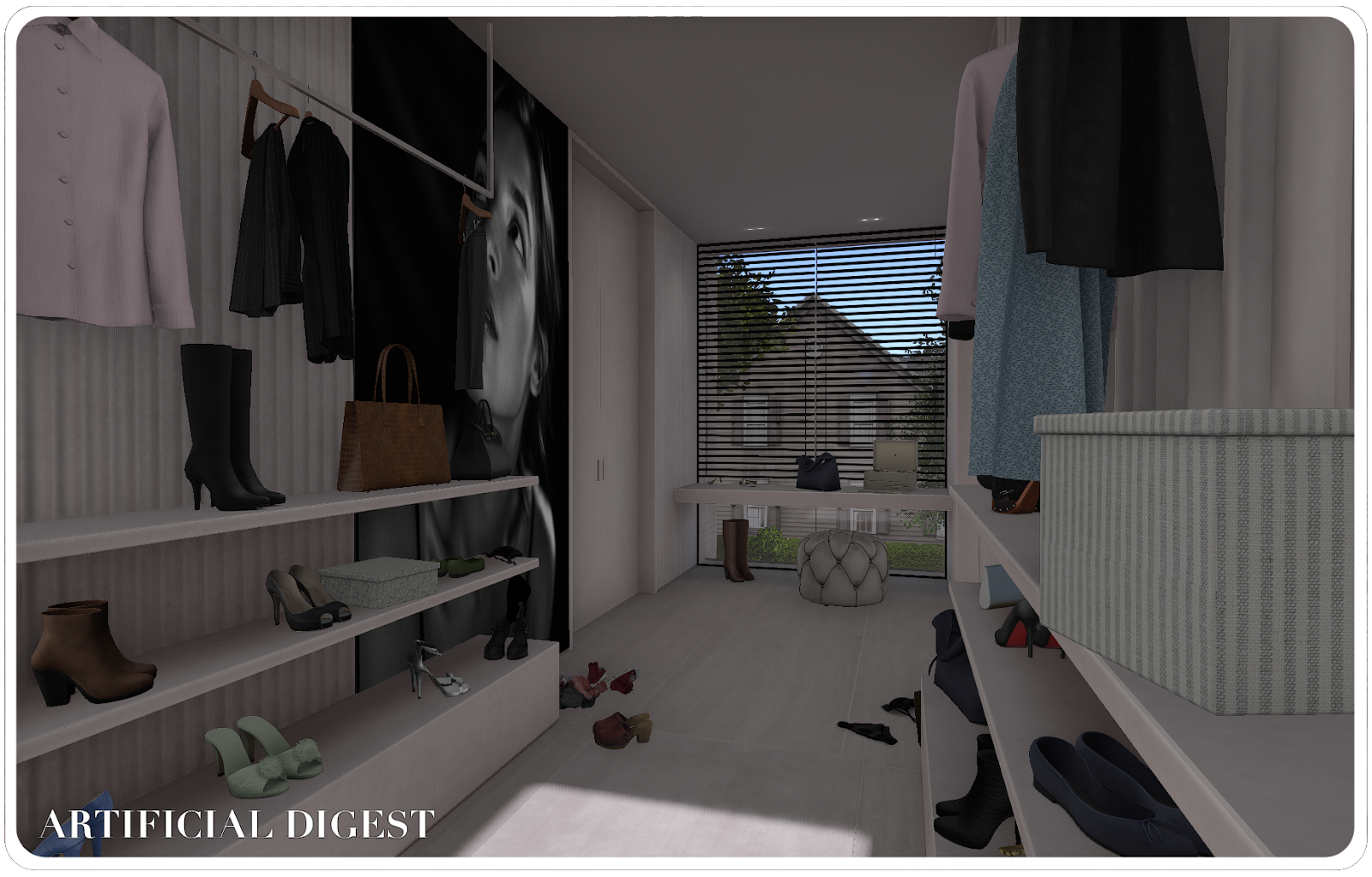
If the bedroom hinted at Doreen’s private self, the walk-in wardrobe confirms her mythology.
Flooded with soft daylight from the skylight above, the space feels less like a room and more like a gallery of wearable art. Every piece is precisely placed, silks draped beside sharply tailored jackets, heels lined up like soldiers awaiting inspection, and handbags that could fund a small start-up.
“This,” she says, her voice warming, “is my favorite place.”
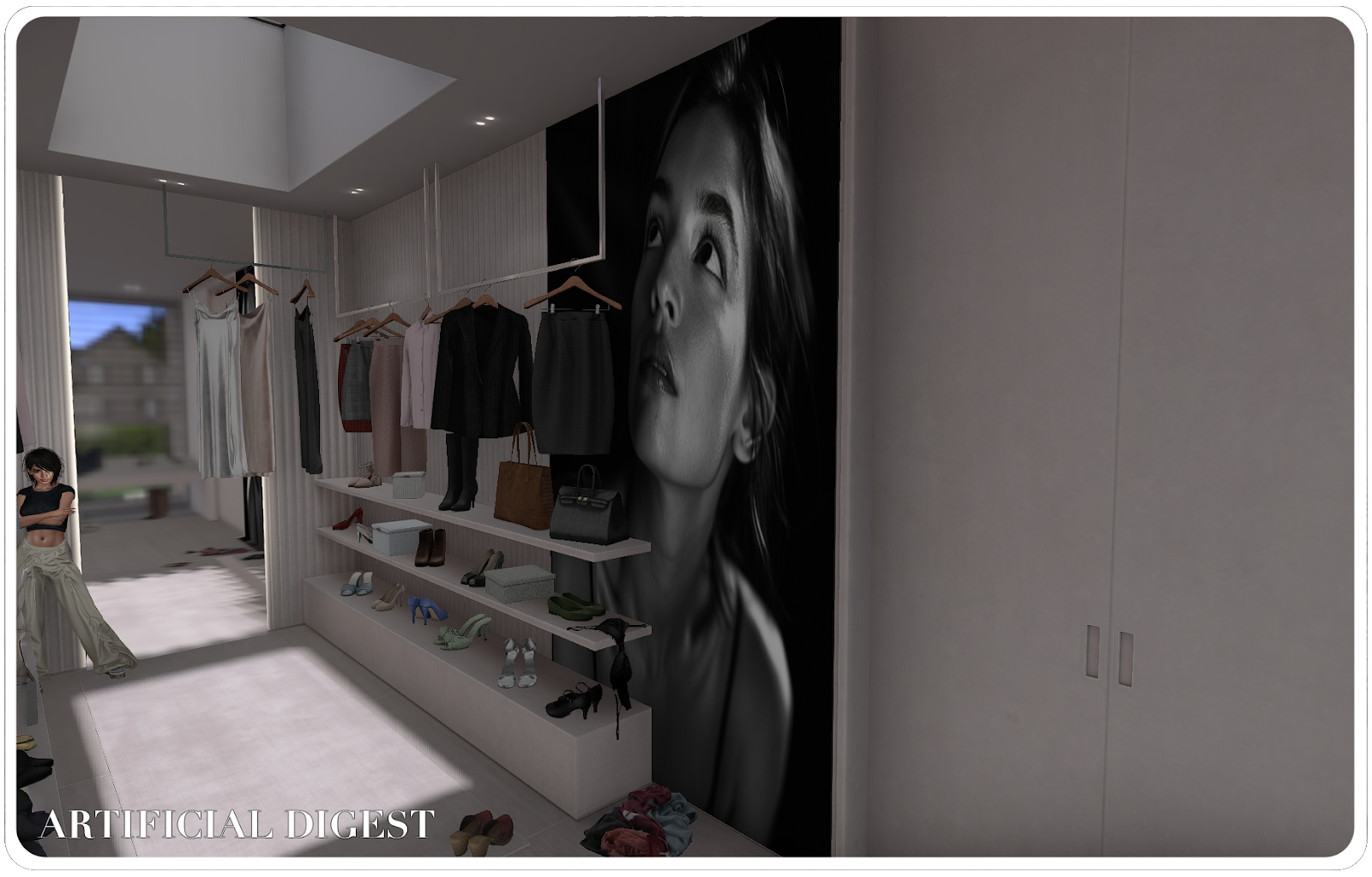
It’s easy to see why. Here, the lines blur between fashion and identity, between who Doreen is and who she becomes. The oversized black-and-white portrait that dominates one wall captures an almost celestial study in light and longing. It’s not vanity, exactly. It’s devotion, to the craft, to the ritual of becoming Doreen.
Still, the room resists perfection. A few shoes are kicked aside; a clutch lies open on the floor, lipstick uncapped. These small, human details make the space feel alive, a gentle rebellion against the order that defines her career.
“I don’t plan outfits,” she insists with a half-smile. “They just happen.”
Her PA coughs quietly but says nothing.
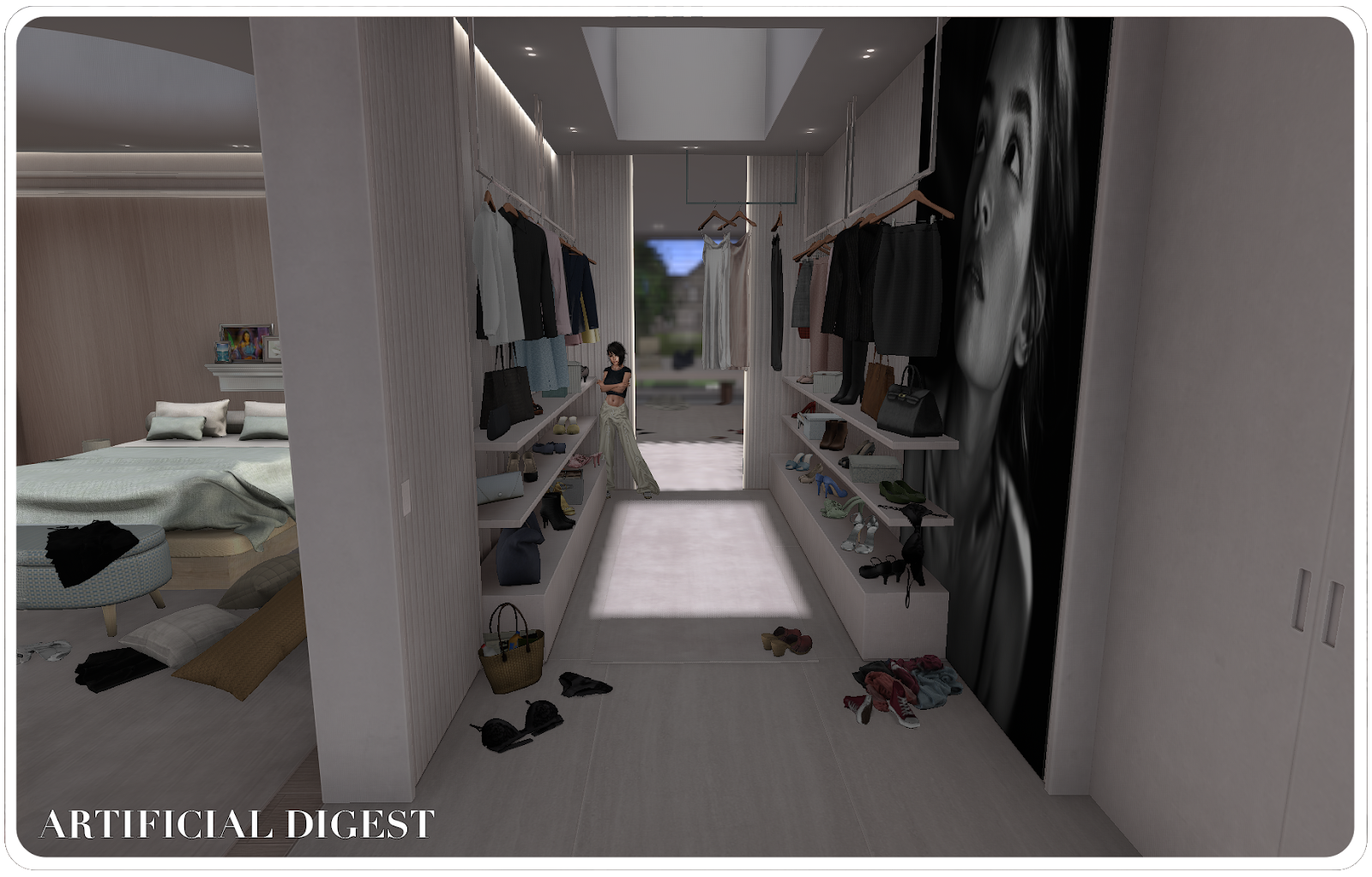
Standing in the doorway, she gestures to the racks. “Every piece here has a story. This one,” she lifts a blazer, “I wore for my first major campaign. That one, ” she points toward a flowing white dress, “, for an afterparty in Venice. I don’t even remember how I got home.”
We laugh, and so does she, the sound soft, unguarded, briefly real.
For a moment, the wardrobe feels like more than a shrine to fashion; it’s an archive of a life lived in moments, one photograph, one fitting, one takeoff at a time.
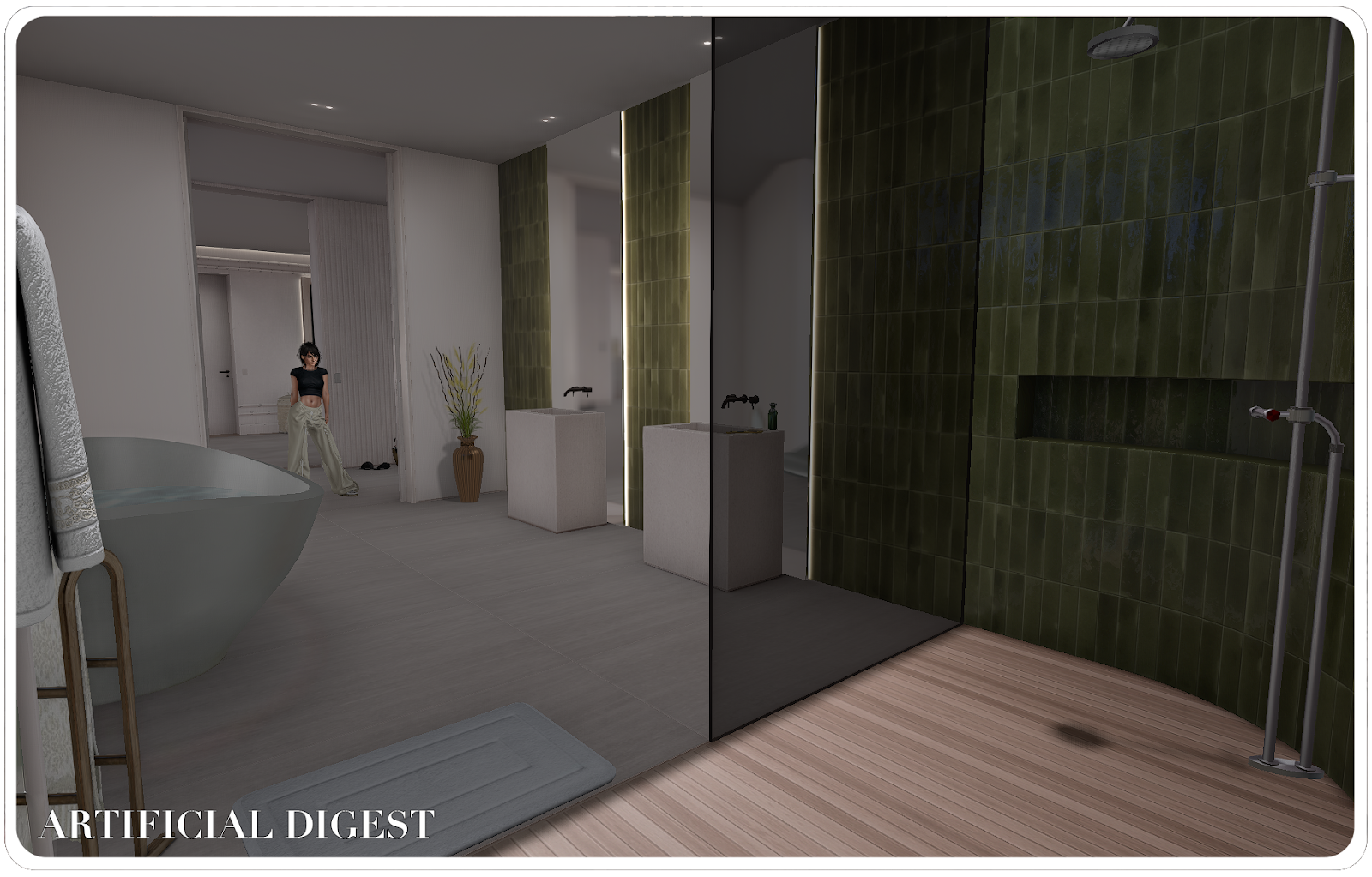
Behind the bedroom lies what Doreen calls “the quietest room in the house.”
The bathroom feels less like a utility space and more like a private sanctuary, cool, deliberate, almost ceremonial. The muted green tiles catch the soft light from the skylight, their glazed surfaces giving off a calm, underwater shimmer. Twin monolith sinks stand opposite one another, as if waiting for a dialogue that never quite happens.
“It was a gift,” she says, almost offhand. “From my friends at Chanel.”
The word friends hangs in the air, just long enough for everyone to imagine what kind of friendship comes with Italian marble and custom mirrors that look like liquid silver.
The bath itself is carved from a single piece of stone, matte, sculptural, improbably heavy. The kind of object you don’t use so much as admire. Still, Doreen insists she does. “Sometimes, after a long trip, I light some candles, play Nina Simone. I remember to breathe.”
It’s easy to picture her here, alone, the hum of the world briefly paused, the one space where reflection isn’t captured by a camera.
Her assistant hovers discreetly in the doorway, but Doreen lingers. “Everything here,” she says, tracing her hand along the sink’s edge, “was chosen with care. If you start the day surrounded by beauty, it changes your rhythm. You move differently.”
We nod, though the thought strikes as more profound than she likely intended.
We return to the mezzanine, the quiet bridge that floats above the living room. From here, the full geometry of the house reveals itself, lines, light, reflections, all converging in an architectural whisper.
“I like to stand here,” Doreen says, resting her arms along the glass railing. “To reflect. Or whatever.” She laughs, though the sound barely rises above the hush of the room. The statement, casual as it is, feels strangely honest.
Below, the space glows in twilight hues: the structured calm of her living room, the shoes aligned like punctuation on the built-in shelves. It’s difficult not to see the irony. Doreen’s life, perfectly designed, impeccably styled, is both blueprint and reality, constructed and lived in equal measure.
She gazes downward, to the world framed by her own success, the walls, the magazines, the faces that look back at her. “This place,” she says, “it’s mine. Not the house, the space.”
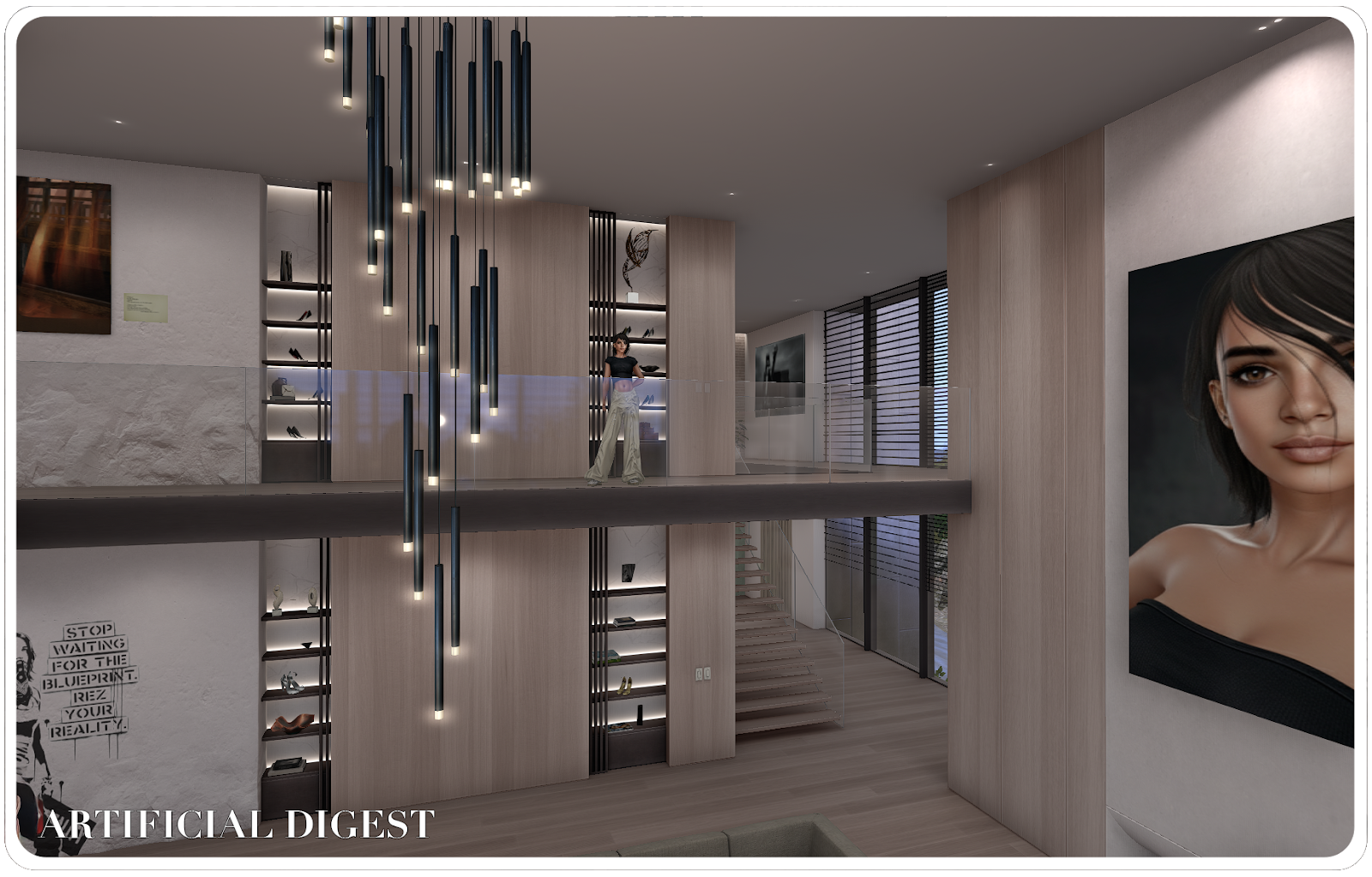
The photographer doesn’t move. The PA glances at her watch but stays silent. For once, there’s no direction, no staging. Just Doreen, hovering above it all, poised between artifice and authenticity, between reflection and performance.
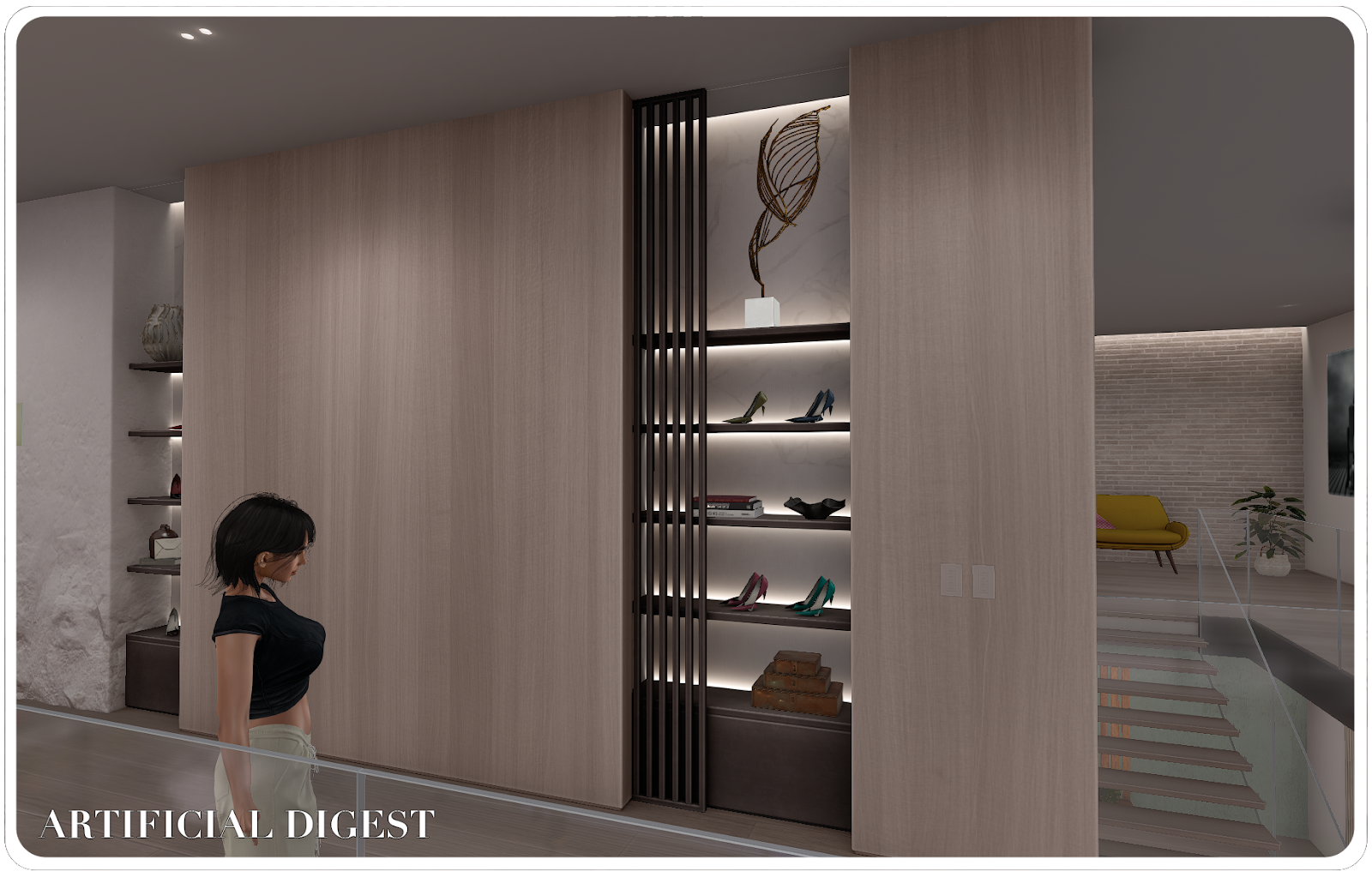
We move along the upper hall again, its rhythm of recessed light and vertical shelving repeating like the beats of a well-timed runway. Each alcove holds a curated token, sculptural heels, art books, a single bronze leaf frozen mid-motion.
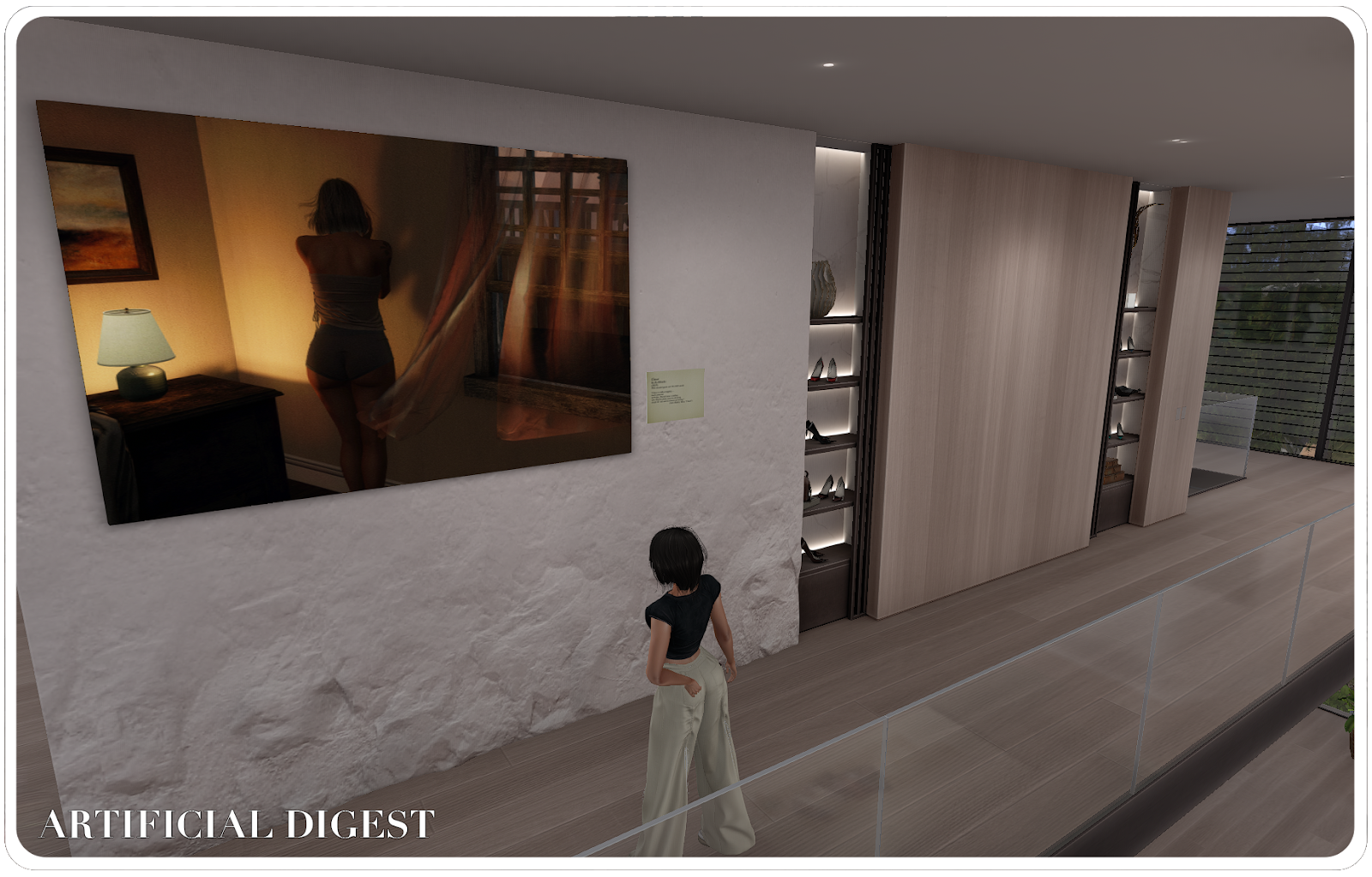
Halfway down, Doreen stops before a photograph that interrupts the geometry of the space: warm light, a woman’s back turned, caught between exposure and retreat.
“It’s by @Scylla Rhiadra,” she says, the name spoken with both pride and care. “She’s incredible, a little controversial in the art world, but that’s what makes her honest.”
She folds her arms, her voice lowering. “When I told her how much I loved this piece, she just… gave it to me.”
The gesture still seems to bewilder her, as if generosity of that kind doesn’t fit within the logic of her usual exchanges, as if the artist had quietly hoped for a moment just like this. A feature, a mention, Doreen’s effortless way of weaving her name into the conversation by calling it a great gesture, unaware that this exact exchange, admiration turned into amplification, might have been the artist’s truest intention all along.
The work itself feels almost like a mirror, the same stillness, the same vulnerability dressed in composure. And though she may not realize it, Doreen is standing in the same posture as the woman in the image: back turned slightly to the light, caught in that liminal space between being looked at and being seen.
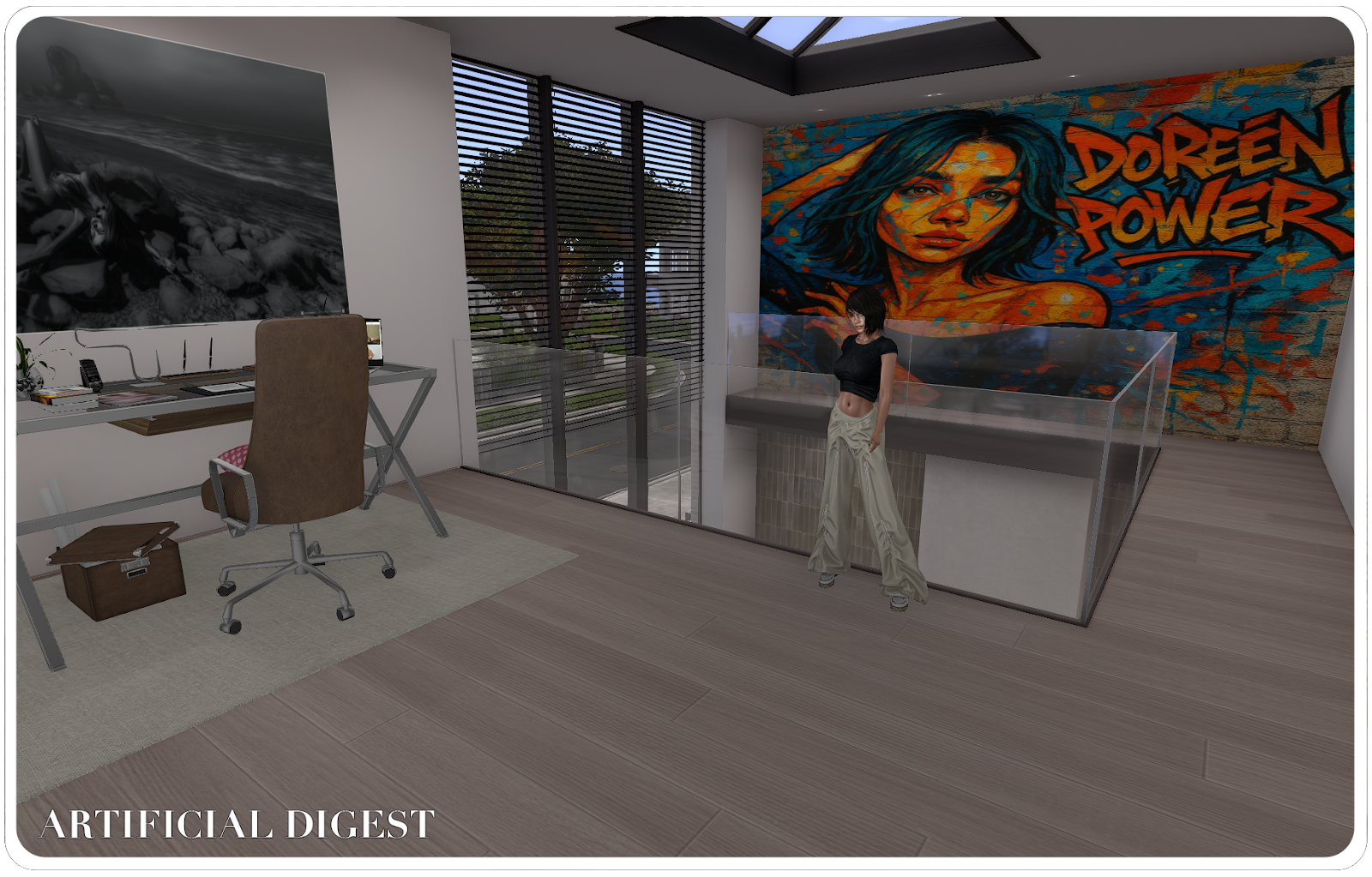
We move to the mezzanine above the kitchen, where Doreen has set up a compact office, functional, sunlit, personal. Behind her, a mural dominates the wall: bold colors, her own face reimagined as street art, the words DOREEN POWER cutting through in unapologetic strokes.
“I didn’t commission it,” she laughs, noticing our glance. “It just… appeared one day.”
Whether that’s true or not, it feels entirely plausible.
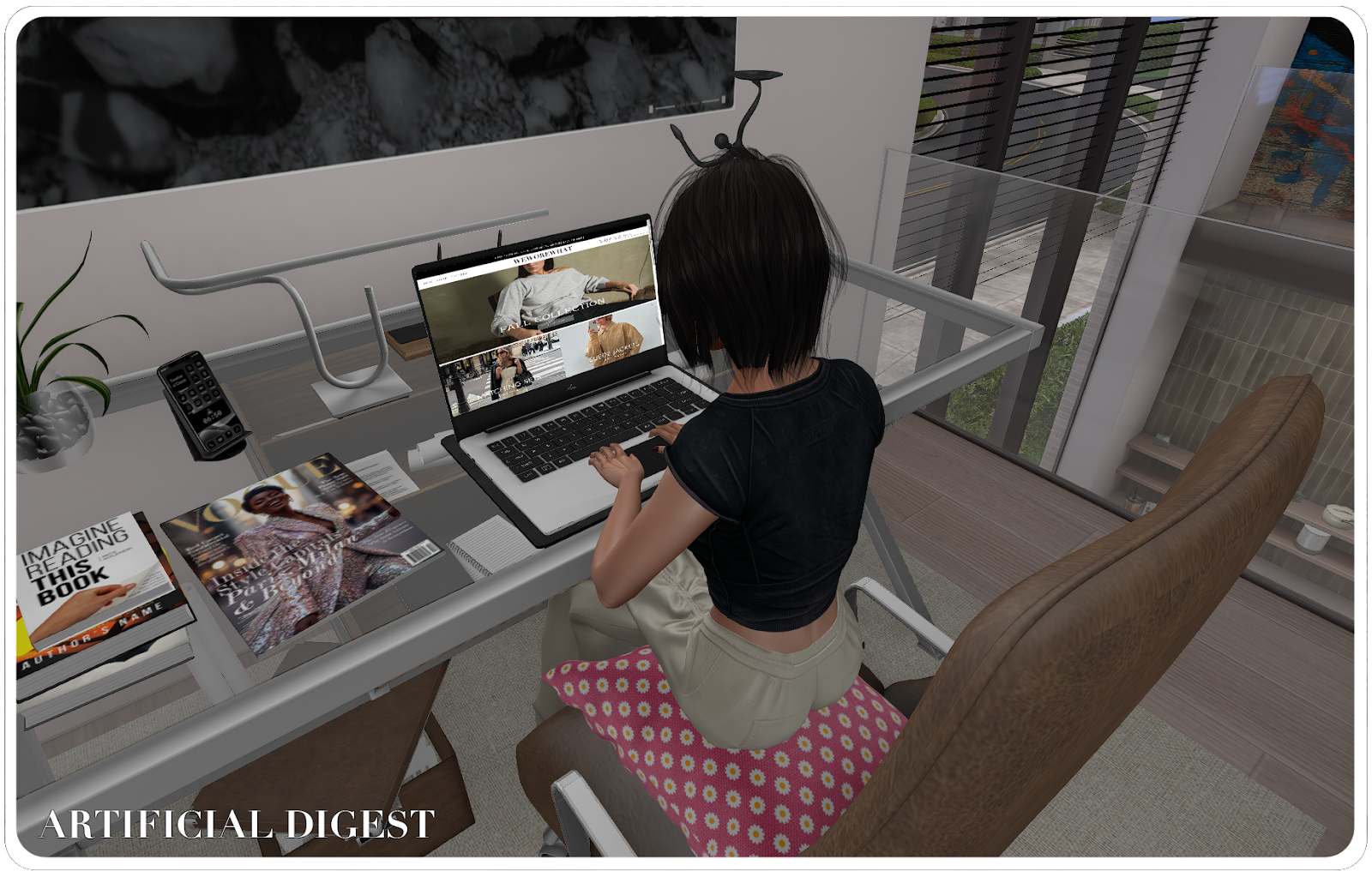
At her desk, a few magazines, a sketchbook, and an open laptop, her world distilled to a small, curated chaos. Next to her keyboard a copy of Vogue featuring @Rowan Amore. The air between them, or rather, the space defined by the media around them, has always been charged with rivalry.
But Doreen waves that off with practiced ease. “Rowan and I go way back,” she says. “We did the Marie Claire cover together, remember? The press likes a good story, competition, drama, but the truth is simpler. We’re colleagues, and we love what we do. That’s the bond.”
Then, more softly: “I’m one of the few who can really make her laugh.”
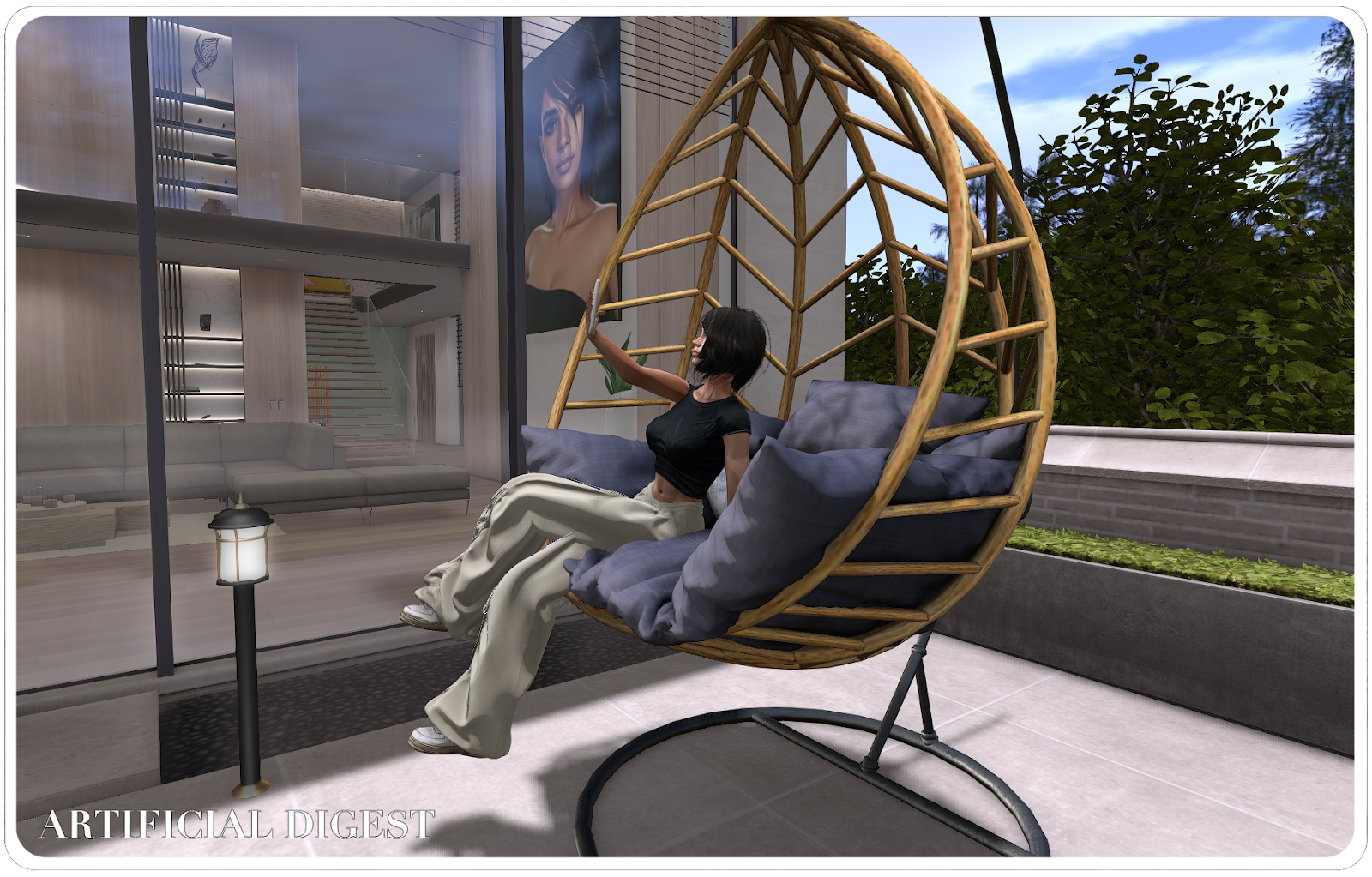
We end the afternoon on the patio, where light slips between the trees and the glass façade glows softly behind her. Doreen settles into the hanging chair, phone in hand. The Artificial Digest team takes a few shots, the practiced angles, the familiar grace. Then, almost without thinking, she turns the camera toward herself. A quick selfie. The smallest flicker of control reclaimed for her social media presence.
Beyond the lens, the estate stretches quietly toward the street, Adelara Estate East, the place she now calls home. “It’s funny,” she says, looking out over the trees, “I’ve lived in so many cities, but this one feels… real.”
For a moment, she isn’t posing. The rhythm of traffic, the filtered light, the faint reflection of her own portrait in the glass, it all folds into a single, unguarded frame.
In the end, the house mirrors its owner perfectly: refined yet restless, grounded yet always ready for the next story to unfold.
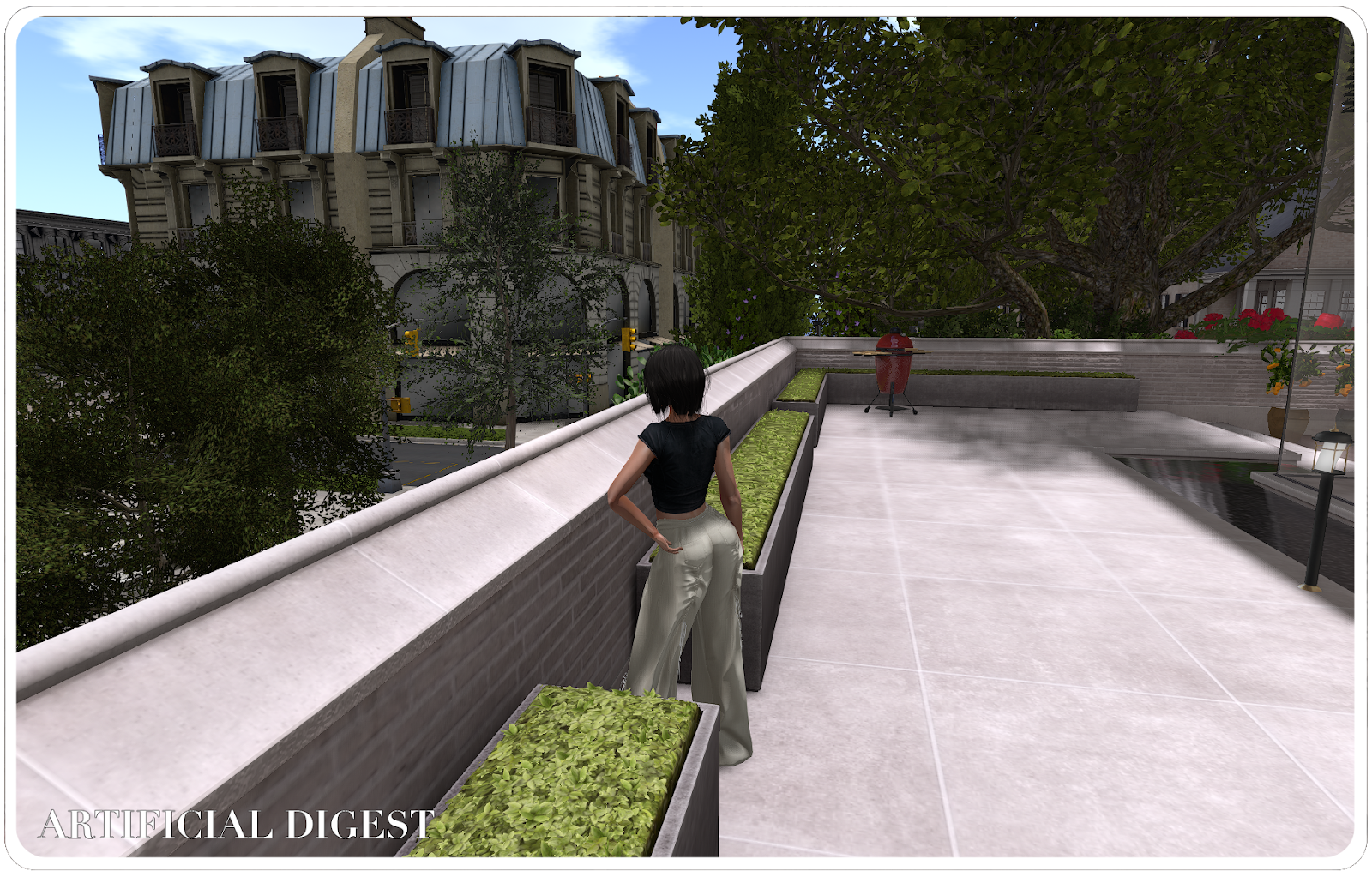
As the Artificial Digest team begins to pack up, evening folds gently over Adelara Estate. The glass façade catches the last traces of light, reflecting Doreen’s portrait back into the dusk. Her PA reappears, a soft hum of efficiency against the growing quiet as Doreen walks in “Stay for dinner,” she says suddenly, half invitation, half impulse. For a second, you wonder if this is what loneliness looks like when it’s dressed in designer ease, an unfilled kitchen, a terrace built for gatherings that never happen, a woman whose life is both admired and, perhaps, a little untouched.
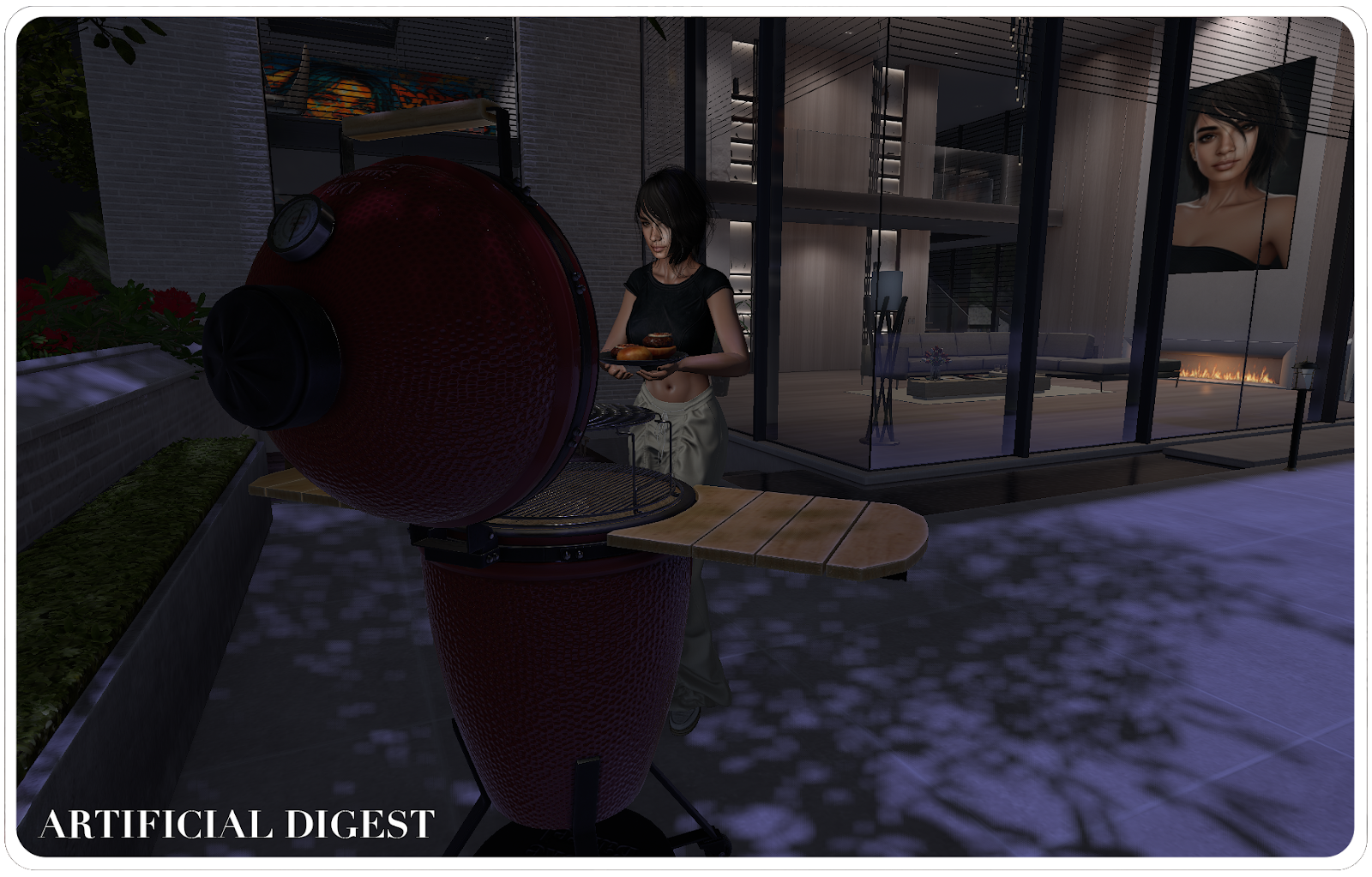
Not much later and after her staff prepared the food, she moves toward the grill, lifting a plate of vegan burgers, the flicker of the flame painting her in warm light. The team takes one last photo. Doreen laughs, effortlessly, beautifully, and the lens catches it all: the ease, the performance, the faint outline of solitude just beyond the glow.
As dusk deepens, the Artificial Digest team takes the opportunity to capture a few final shots. The temperature has dropped, and the house glows like a stage set, all soft light and shadow, reflections playing across the glass façade.
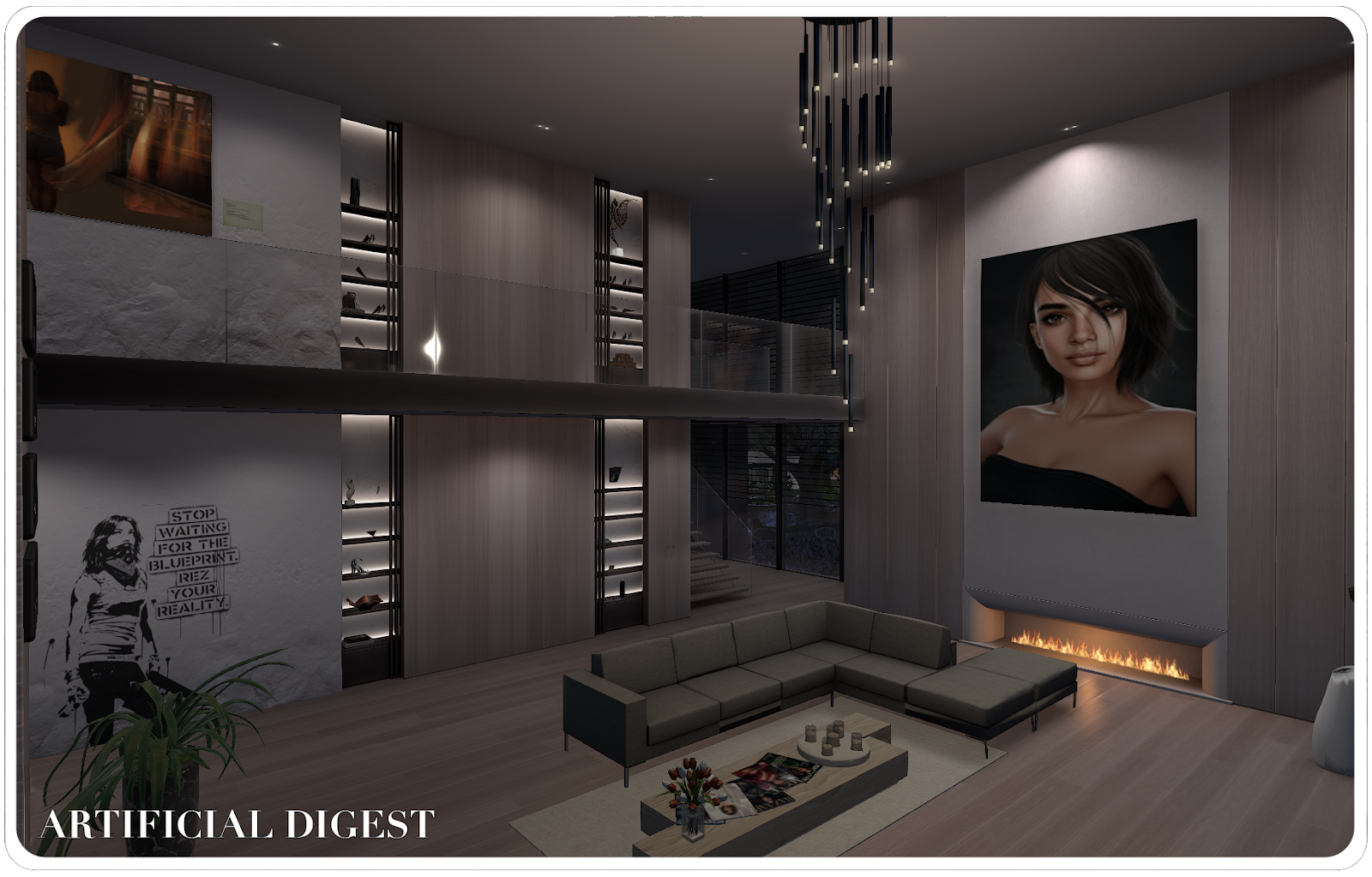
Inside, the fire hums gently beneath the giant portrait of Doreen, while outside, her figure is mirrored faintly in the panes, the living and the represented, side by side.
Her PA mentions, almost proudly, that the light plan was designed by a team from Denmark. Every angle, every reflection, every glow carefully orchestrated. It shows, the architecture of light seems to hold the house together as much as its walls.
The scene is serene yet curiously revealing. Through the wide glass, Doreen’s world appears both expansive and contained, every corner curated, every detail deliberate.
And as the night settles over Adelara Estate, it’s hard not to think of the dualities that define her: presence and privacy, warmth and control, light and shadow.
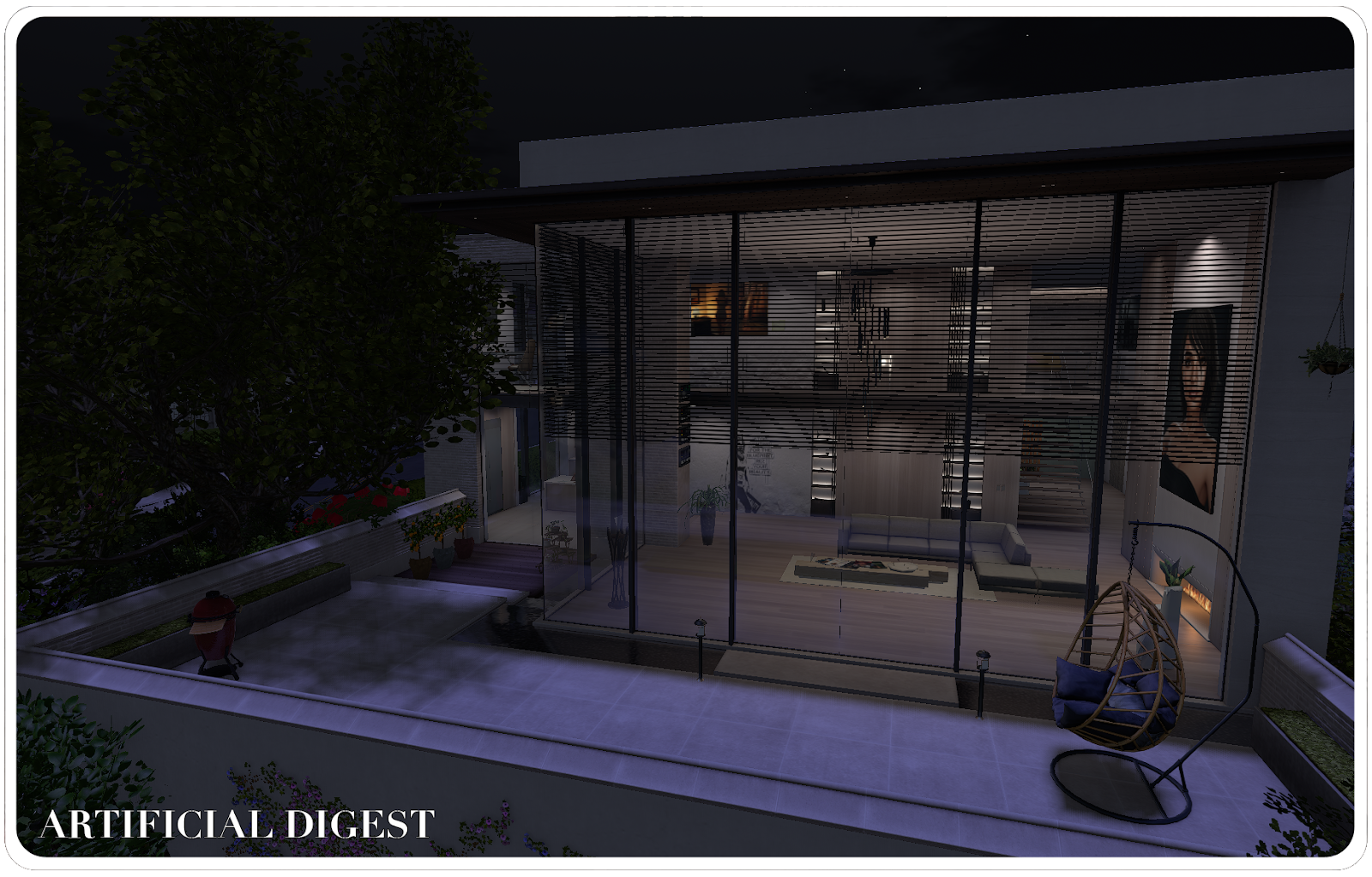
The supermodel’s home, in the end, is a portrait, not of perfection, but of a woman learning, perhaps, how to live inside her own image.
Before the team finally heads out, Doreen’s PA suggests two last photos, “something warm, something real.”
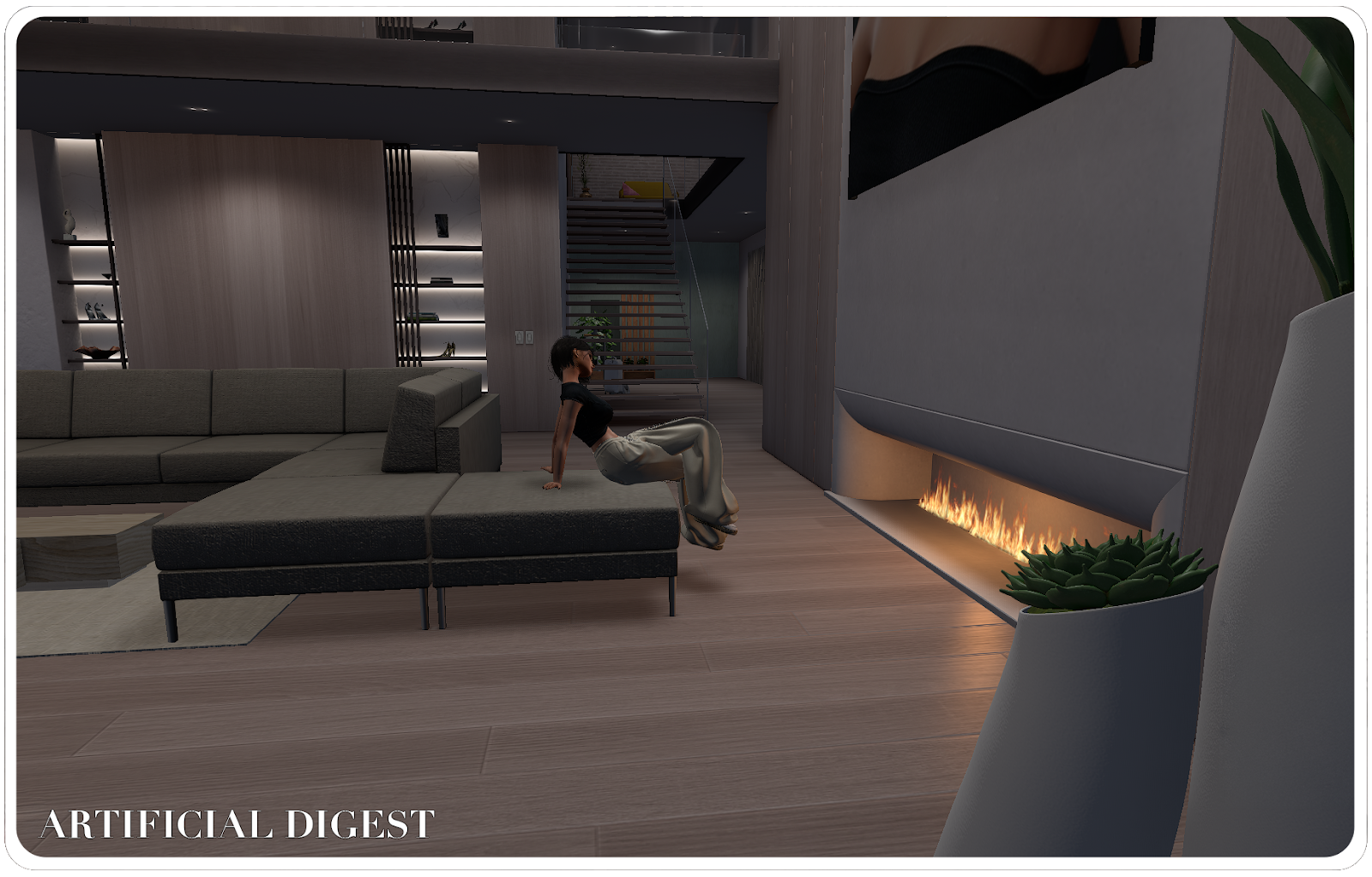
She settles near the fireplace, its light tracing the quiet geometry of the room. It’s a fitting scene, Doreen framed by her own portrait above, the flame below, both steady and controlled. She looks at ease, though her gaze drifts for a moment, as if searching for something in the reflection of the glass.
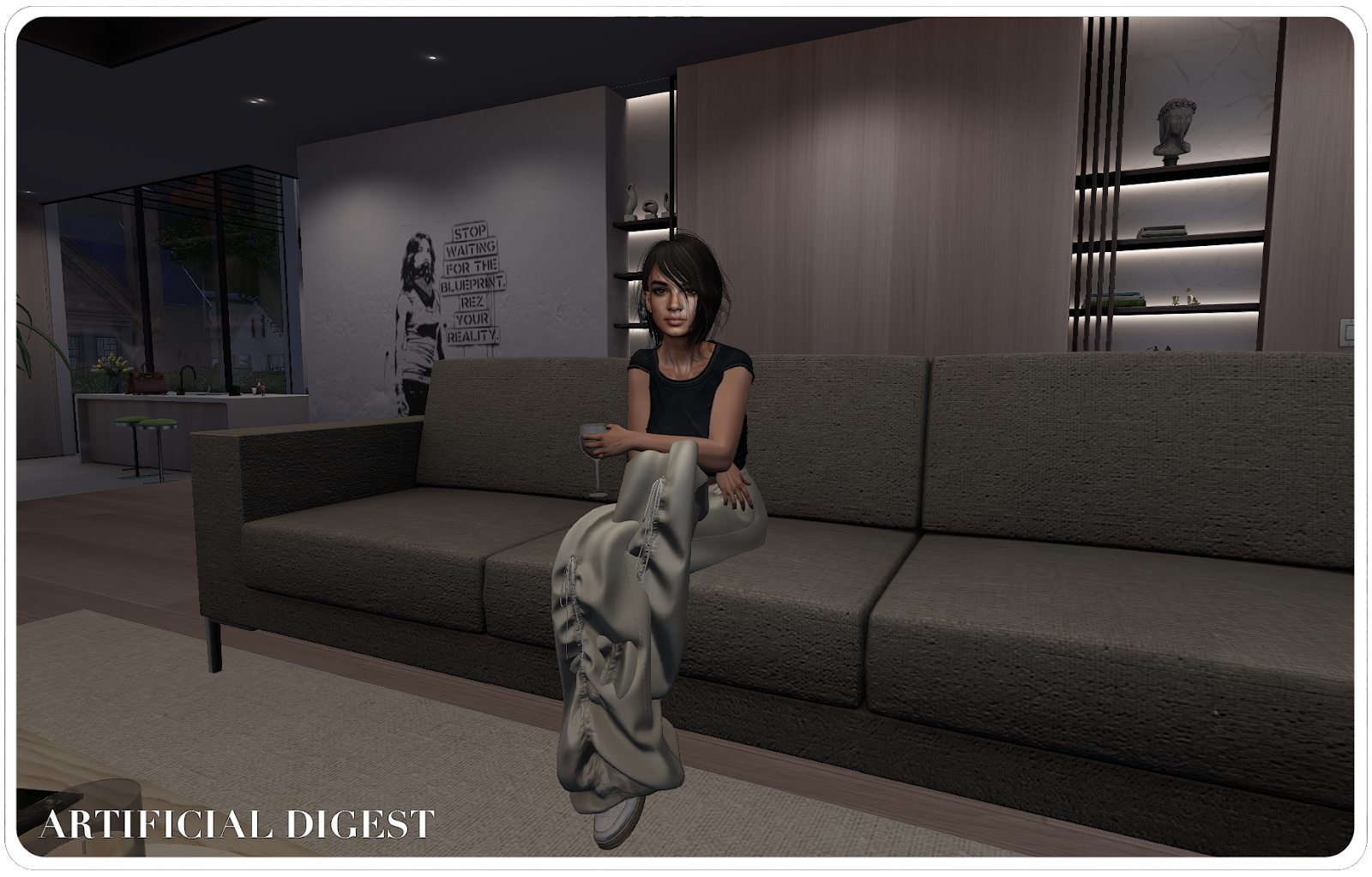
Then, a final shot. Doreen on the sofa, a glass of wine in hand. “It’s from a vineyard owned by the CEO of Gucci,” her PA mentions casually, a "close personal friend" again. The wine, of course, is exquisite.
When the cameras are packed away and the room returns to stillness, Doreen reappears with a small stack of glossy magazines, the latest issue of Vogue, her face luminous on the cover. She hands one to each member of the team with a smile that manages to be both gracious and just a little rehearsed. “Thank you,” she says, as if offering something rare. The gesture feels sincere, even if it’s also perfectly on-brand, Doreen giving a piece of herself, the only version the world ever really gets to keep.
From the corner, as we make their way to the car, our team turns for one last photo, the house on the hill glowing softly against the night sky. Through the glass, her portrait still watches over the room, the fire’s reflection flickering below.
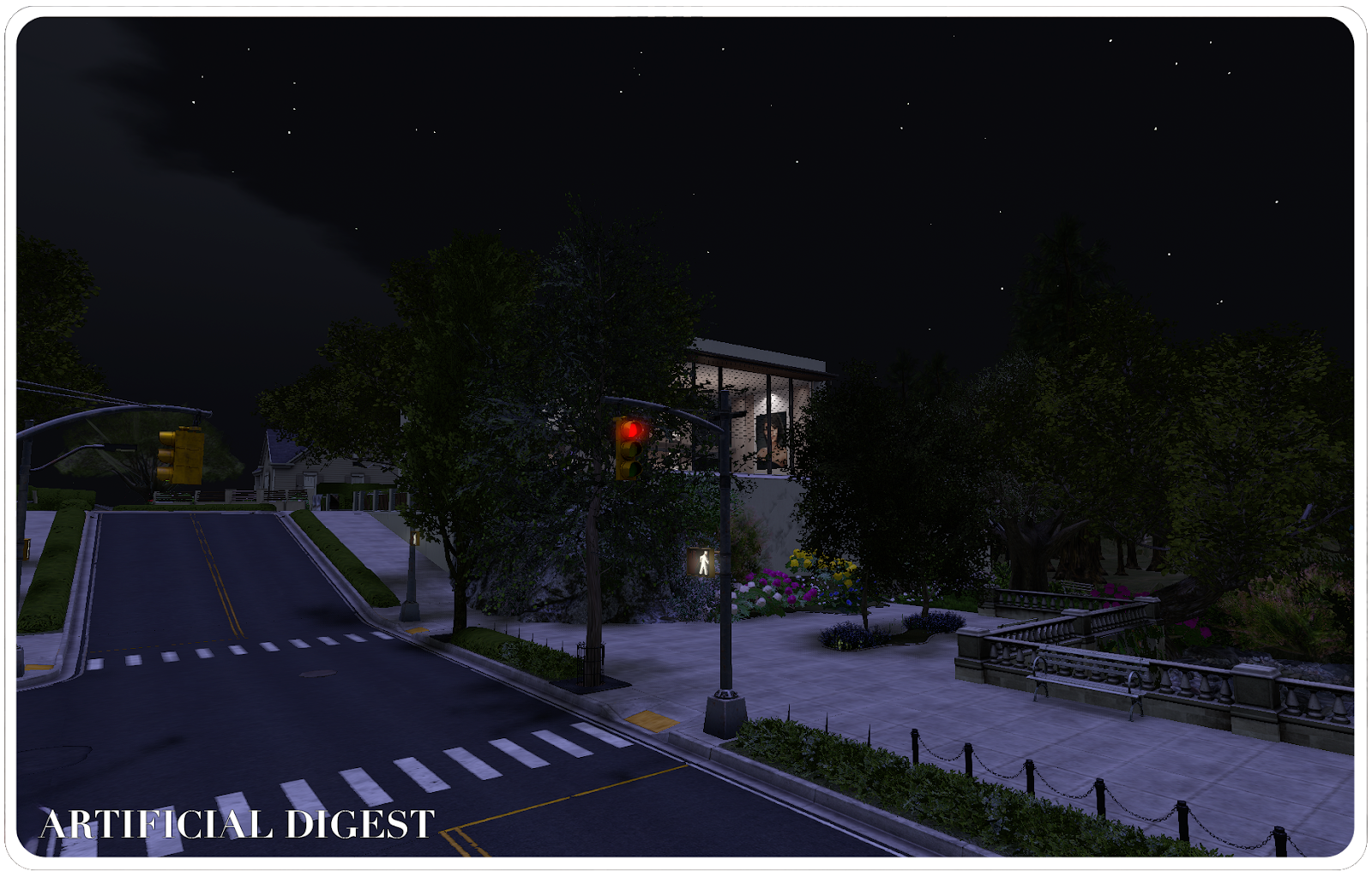
It feels like a fitting final image: a sanctuary of light and poise, suspended above the quiet streets of Adelara. Inside, Doreen. Power, supermodel, muse, mystery, sits in the calm she’s built for herself, a queen in her own right.
Note from the Editor
This feature came to life after a suggestion from pop icon @Kylie Jaxxon, who recently appeared on the cover of Rolling Stone. It was Kylie who encouraged Doreen to share a glimpse of her home with the public, a rare invitation into her private world.
After some thought, Doreen’s team decided that Artificial Digest would be the perfect platform. A collaboration that felt more aligned with her recent creative sensibility, refined, image-driven, and quietly revealing, much like Doreen herself.
If you enjoyed reading this story and haven't already seen them; I wrote two other ones as well. You can find them here:
